make preferable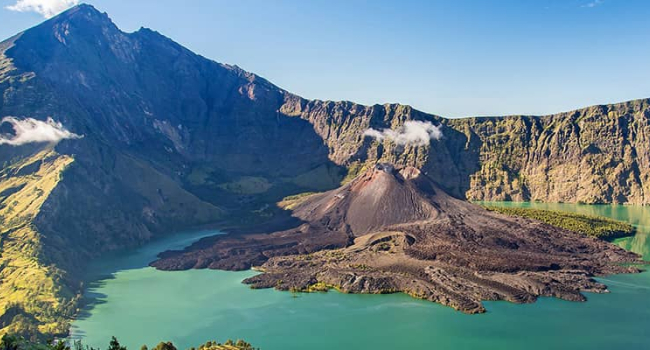
Around 74,000 years ago, the massive eruption of the Toba in Indonesia may have led to a dramatic decline in the population of early humans—down to just a few thousand individuals by some estimates. However, a new study shows that our ancestors successfully survived this global catastrophe thanks to remarkable adaptability.
The findings of an international team of archaeologists from University of Texas at Austin have been published in Nature.
Evidence of Life After the Catastrophe
Scientists closely examined the ancient settlement of Shinfa-Metema-1 in northwestern Ethiopia. Stone tools, animal bones, and remains of hearths found at the site indicate that humans continued to live in the area even after the Toba eruption.
The connection between the site and the global catastrophe was established through microscopic particles of volcanic glass—cryptotephra. Their chemical composition precisely matched ash from the Toba eruption. Analysis of ostrich eggshells showed that after the ashfall, the regional climate became significantly drier: dry seasons intensified, rivers shrank, and access to food decreased sharply.
How Lifestyle and Diet Changed
Before the eruption, local inhabitants primarily hunted large terrestrial animals such as antelopes, primates, and other mammals. After the catastrophe, their diet changed dramatically: the share of fish among the recovered bones increased from 14% to 52%. As rivers dried up, they formed small isolated pools where fish became much easier to catch.
In addition, archaeologists discovered small triangular stone points, likely used as arrowheads. Such tools would have made it easier to hunt small, fast-moving prey under conditions of severe resource scarcity.
Flexibility Was Key to Survival
Researchers emphasize that the survival of early humans was driven not only by new technologies but also by high behavioral flexibility. When resources around one water source were depleted, small groups moved along riverbeds in search of water and available prey.
The study’s authors noted that humans demonstrated an extraordinary ability to rapidly change their subsistence and movement strategies in response to abrupt environmental changes.
In Brief
The eruption of the Toba about 74,000 years ago was one of the most powerful in Earth’s history and may have reduced the human population to just a few thousand. However, archaeological evidence from Shinfa-Metema-1 shows that our ancestors survived. After the catastrophe, they significantly increased fish consumption (from 14% to 52%), began using arrow-like stone points, and actively moved along rivers in search of resources. Behavioral flexibility and dietary adaptation helped humans endure this global climatic stress. The study is published in Nature.