make preferable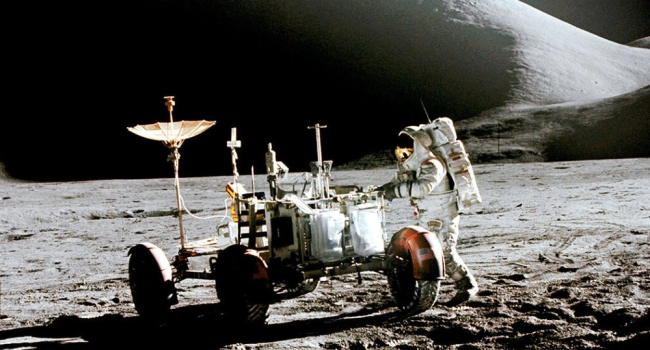
Future Artemis missions may gain a fundamentally new way to monitor seismic activity on the Moon. According to Space.com, instead of bulky and expensive seismometers, scientists propose using ordinary fiber optic cables laid directly on the surface. Two recent studies show that such a system can function like thousands of sensitive sensors at once, making it much easier and cheaper to study the Moon’s internal structure.
How the new technology works
The idea is based on a method called Distributed Acoustic Sensing (DAS). Laser pulses are sent through a fiber optic cable. Any ground vibration, even the slightest, causes microscopic changes in the light signal. By analyzing these changes, scientists can determine where the vibration occurred and how strong it was.
A single cable several kilometers long can replace thousands of individual seismometers. At the same time, it is lightweight, durable, and relatively inexpensive—an ideal solution for lunar conditions, where every kilogram of payload costs a huge amount of money.
Carley Donahue, a scientist at Los Alamos National Laboratory, explained that the Moon has very high seismic activity, but deploying traditional seismometers is extremely difficult and expensive, which led researchers to consider whether fiber optic cables could be used on the lunar surface to detect seismic activity.
Why this is especially important for the Moon
The Moon does not have tectonic plates, so moonquakes occur for different reasons: Earth’s tidal forces, meteorite impacts, and extreme temperature fluctuations (the surface heats up to +120°C during the day and cools to –130°C at night). These quakes can last much longer than earthquakes and pose a real risk to future lunar bases.
Data from Apollo missions showed that the Moon is quite seismically active, but only a few instruments were used at the time. The new technology would allow much larger areas to be covered and provide continuous monitoring.
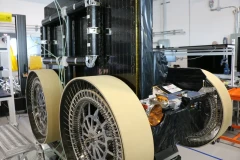
Researchers conducted laboratory experiments and confirmed that even if the cable is simply laid on the surface (rather than buried), it can effectively detect vibrations on the Moon. Thicker and more rigid cables produce stronger signals, although they add weight—an important trade-off for space missions.
Applications for Artemis and future bases
The technology is particularly relevant for the Artemis program. NASA plans to establish a long-term presence on the Moon, and understanding seismic risks will be critical when selecting sites for bases, landing zones, and habitats. In addition, the cables could track how far dust and debris travel during spacecraft landings—an important safety factor for future operations.
Donahue explained that researchers wanted to determine whether a robot or rover could deploy fiber optic cables over many kilometers on the lunar surface without burying them while still collecting useful data, noting that if this proves feasible, it would be a much cheaper and more efficient way to gather information.
In brief
Scientists propose using fiber optic cables laid across the Moon’s surface to monitor moonquakes. One cable can function like thousands of seismometers thanks to Distributed Acoustic Sensing. The method is lightweight, inexpensive, and does not require complex installation. Research from Los Alamos National Laboratory confirms its effectiveness even without burying the cables. The technology could become a key part of the Artemis program, helping to select safe locations for lunar bases and better understand the Moon’s internal structure.