make preferable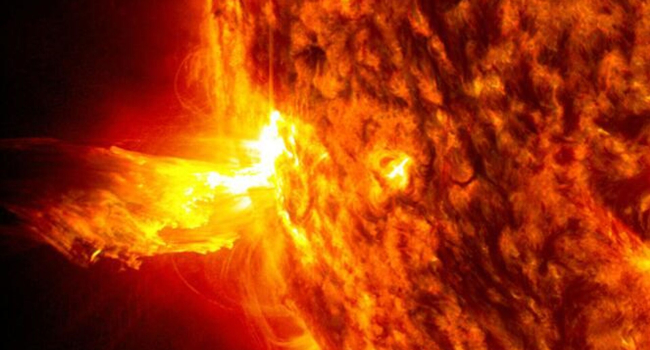
After several days of geomagnetic turbulence, space weather is beginning to settle down. Magnetic storms at levels G1–G2, caused by a coronal hole and a stream of solar wind, peaked over the weekend and are now gradually fading. However, the Sun is not planning to stay quiet for long: on the morning of March 19, plasma from an M2.8-class flare is expected to reach Earth, potentially disturbing the magnetosphere again. Details come from the latest forecast by the Space Research Institute of the Russian Academy of Sciences.
March 16–18: return to calm conditions
According to the institute, solar energy output is currently at a minimum. Over the past day, the Sun produced only two weak M-class flares (M1.2 and M1.0) and about 30 minor C-class flares. This briefly raised activity to a moderate level, but the trend is now clearly downward, and accumulated energy has largely dissipated.
The influence of the coronal hole that caused recent disturbances is also ending. The peak of geomagnetic activity occurred on Saturday, and now most indicators show a return to quiet (green) conditions.
The forecast for the coming days is as follows:
- March 16 — mostly stable magnetosphere, Kp index around 2–3. Residual fluctuations remain possible (storm probability ~31%, quiet conditions ~34%).
- March 17 — further improvement: storm probability drops to 12%, while calm conditions rise to 58%. Kp remains low (2–3).
- March 18 — nearly ideal conditions: storm probability decreases to 7%, calm conditions reach about 68%. Earth exits the influence of previous disturbances.
Overall, the Sun has been relatively quiet for about a month. No major active regions are visible either on the near side or on the far side, which is currently being monitored by Solar Orbiter. This suggests a relatively calm week ahead.
But the break will be short: a storm arrives on March 19
Scientists updated their model of the M2.8 flare that occurred on March 16 at 15:00 Moscow time. The plasma cloud is traveling at an average speed of about 670 km/s. It is expected to take just over 60 hours to reach Earth.
Arrival is forecast for March 19 between 4:00 and 6:00 Moscow time (approximately 6:00–8:00 in Yerevan).
At its peak, the storm could reach:
- G2 (moderate)
- possibly G3 (strong)
The probability of a more extreme G4 storm is estimated at only 1–3%, as the flare was not powerful enough to produce severe consequences.
The disturbance is expected to last about 10 hours.
What this means for people
For most healthy individuals, such a storm will pass almost unnoticed. However, people who are weather-sensitive, or those with cardiovascular conditions, hypertension, or migraines, may experience:
- headaches
- fluctuations in blood pressure
- fatigue
- sleep disturbances
During such periods, it is advisable to avoid heavy physical exertion, stress, alcohol, and excess caffeine, drink more water, and, if possible, stay in a calm environment.
In brief
From March 16 to 18, Earth’s magnetosphere is returning to calm conditions: the Kp index is around 2–3, and storm probability drops from 31% to 7%. Residual fluctuations are still possible, but the peak of recent disturbances has passed.
However, on the morning of March 19, plasma from an M2.8 solar flare will reach Earth, potentially triggering a G2–G3 geomagnetic storm lasting about 10 hours.
The Sun is currently quiet—but the calm will be short-lived.