make preferable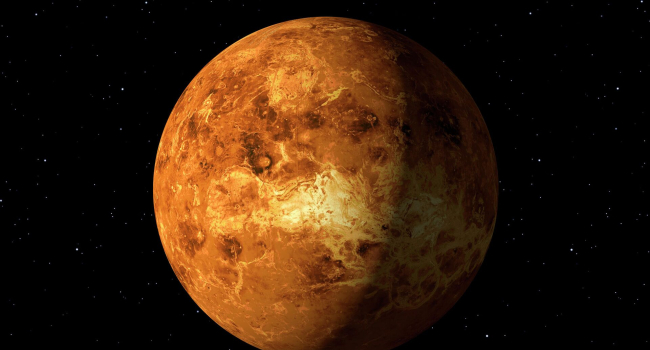
Venus remains one of the most challenging targets for space missions—even half a century after the first successful landings. Olesya Romenskaya, head of the methodological and educational department at the Yaroslavl Cultural and Educational Center named after Valentina Tereshkova, explained in an interview with RIA Novosti why entering the planet’s atmosphere requires almost perfect precision.
The entry angle is a matter of life and death for the spacecraft
The main obstacle when approaching Venus is its atmosphere. It is extremely dense, composed mostly of carbon dioxide, and creates enormous drag.
To avoid burning up or bouncing back into space, the spacecraft must enter the atmosphere at an angle of minus 20 degrees (±1 degree tolerance).
“A smaller angle may lead to the spacecraft bouncing off the atmosphere, while a larger angle may cause it to burn up in the atmosphere of Venus,” Romenskaya explained.
If the entry angle is too shallow, the probe simply ricochets off the upper layers of the atmosphere and flies back into interplanetary space. If it is too steep, the spacecraft plunges into dense layers too quickly, heats up to thousands of degrees, and is destroyed.
For comparison, spacecraft entering Earth’s atmosphere typically have a much wider tolerance window of several degrees, while Venus requires far greater precision.
History: from failures to the first soft landing
Early attempts to reach Venus in the 1960s often ended in accidents or partial successes. Soviet probes in the Venera program—from Venera-1 to Venera-6—either lost contact or burned up in the atmosphere.
The breakthrough came in 1970, when Venera-7 made the first-ever soft landing on another planet and transmitted data from the surface for 23 minutes. It was a historic achievement.
Later missions included additional Soviet probes—Venera-8 through Venera-14—as well as Vega-1 and Vega-2. Venus was also explored by the United States with Pioneer Venus and Magellan, and by Europe with Venus Express.
Despite these missions, achieving a soft landing remains extremely difficult—the atmosphere of Venus effectively “roasts” anything that enters it.
Why Russia has chosen Venus again
Recently, Russian First Deputy Prime Minister Denis Manturov stated that Venus will be the first planet Russia plans to explore under its new deep-space research program.
According to him, such projects require not only enormous resources but also unconventional engineering solutions and bold young specialists capable of proposing fresh ideas.
Venus is often called Earth’s “evil twin.” Although it is similar in size to Earth, it evolved very differently:
- its atmosphere is about 90 times denser than Earth’s
- surface temperatures reach +460–470 °C, hot enough to melt lead
- pressure equals conditions 900 meters deep in Earth’s oceans
- the planet has no global magnetic field
- its clouds consist of sulfuric acid
Despite these hellish conditions, Venus remains a crucial object of scientific study. Understanding how an Earth-like planet could transform into such an extreme environment may help scientists better understand Earth’s future and potential climate risks.
In brief
To successfully enter the atmosphere of Venus, a spacecraft must approach at exactly −20° (±1°). A shallower angle causes the probe to bounce back into space; a steeper angle leads to destruction from extreme heat. This was emphasized by astronomer Olesya Romenskaya.
The first soft landing on Venus occurred in 1970 with Venera-7. Russia now plans to return to Venus exploration as a priority deep-space target, but such missions require extreme precision and new engineering solutions.