make preferable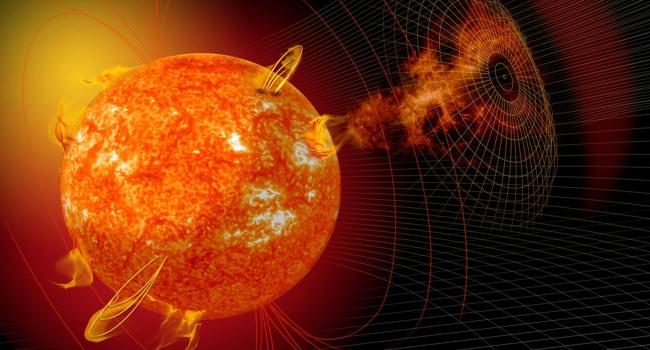
In the first two months of 2026, the Sun showed an unexpected and sharp decline in activity. The average monthly number of sunspots fell to 78.2, the lowest value since August 2022 (74.6). The data were reported by researchers from the Space Research Institute of the Russian Academy of Sciences.
From record peak to sudden decline
The current Solar Cycle 25, which began after the minimum of 2019–2020, reached its peak in August 2024. At that time, the Wolf Sunspot Number climbed to 216, the highest value in about two decades.
After the peak, solar activity began to decline gradually—as expected. However, the recent drop has been much steeper than predicted by solar models.
According to forecasts:
- The February 2026 index was expected to be around 114.8
- Values below 80 were not expected until mid-2027
Instead, the measured February value was 78.2, almost one-third lower than predicted.
Scientists note that overall solar activity is currently decreasing faster than expected.
Temporary fluctuation or new trend?
Researchers believe the drop may still be a statistical fluctuation rather than a long-term shift.
A similar episode occurred in May 2025, when the sunspot index briefly fell to 78.5 before returning to the predicted trajectory within a few months.
March 2026 will likely determine whether the current decline is temporary.
Early data show that during the first ten days of March, the average sunspot number was about 82, roughly the same level as February.
Recent daily observations also show:
- extremely low solar flare activity
- a shortage of energetic processes
- almost no large active regions
Scientists say it is still unclear how long this quiet phase will last.
Why solar activity matters
Solar activity strongly influences space weather. Powerful solar events—such as flares and Coronal Mass Ejections—can trigger Geomagnetic Storms on Earth.
These disturbances can affect:
- satellites in orbit
- electrical power grids
- GPS navigation systems
- radio communication
After the strong peak of 2024, many scientists expected elevated solar activity to continue until 2026–2027. If the current decline persists, however, the transition toward the next solar minimum could begin earlier than anticipated.
What scientists are watching next
Observations will continue throughout March and April 2026.
If sunspot numbers do not return to the predicted range of roughly 100–110, it could indicate that Solar Cycle 25 is weakening earlier and more rapidly than expected.
In brief
Solar activity in January–February 2026 dropped to an average 78.2 sunspots per month, the lowest level in 3.5 years and far below predictions (~114.8). The decline appears to be occurring faster than models anticipated. Scientists from the Space Research Institute of the Russian Academy of Sciences say it may be a temporary fluctuation similar to one seen in May 2025, but March observations will be critical. Current data show very weak flare activity and a lack of large active regions, suggesting the Sun has entered an unusually quiet phase.