make preferable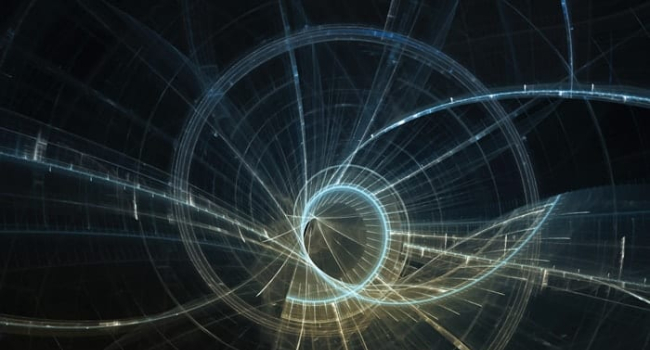
A team of researchers from TU Wien (Vienna University of Technology) has introduced a new mathematical framework that could help bridge the long-standing divide between quantum physics and gravity. Their work proposes quantizing the metric of space-time and introduces a new concept called q-desics—quantum-corrected versions of geodesics.
The study was published in Physical Review D (2025) and represents a potential new tool for testing theories of quantum gravity, one of the biggest unresolved problems in modern physics.
The long-standing challenge of quantum gravity
Modern physics rests on two highly successful—but incompatible—theories:
- Quantum mechanics / quantum field theory, which describe particles and three of the four fundamental forces at microscopic scales.
- General Relativity, developed by Albert Einstein, which explains gravity and the structure of space-time on cosmic scales.
Despite decades of effort, physicists have struggled to merge these frameworks into a single consistent theory.
Several candidates exist, including:
- Loop Quantum Gravity
- String Theory
- Asymptotic Safety
But none has yet provided a definitive experimental prediction that distinguishes it from the others.
The “Cinderella slipper” analogy
Lead author Benjamin Koch from TU Wien compares the search for quantum gravity to the story of Cinderella.
Many theoretical candidates exist, but physicists are still waiting for the “crystal slipper”—a decisive observation that reveals which theory truly fits reality.
The Vienna team’s approach focuses on geodesics, a central concept in general relativity.
A Geodesic represents the natural path that objects follow in curved space-time. Examples include:
- planetary orbits
- falling objects in gravitational fields
- the trajectory of light near massive bodies
Quantizing the geometry of space-time
Instead of quantizing only matter, the researchers propose quantizing the space-time metric itself.
In quantum mechanics, physical quantities like position and momentum become operators acting on wavefunctions rather than fixed values.
Applying this idea to gravity means treating the metric tensor—which defines the curvature of space-time—as a quantum operator.
The study examines a simplified case: a spherically symmetric gravitational field, similar to the one described by the Schwarzschild Metric around a non-rotating star or black hole.
Instead of using classical metric values, the team calculates expectation values of quantum operators, including the operator form of the affine connection (Christoffel symbols).
From geodesics to q-desics
This approach leads to a new equation of motion for particles, which the researchers call a q-desic (short for quantum geodesic).
A q-desic is essentially a quantum-corrected geodesic path through space-time.
According to Koch:
In a quantum space-time, particles may move slightly differently than predicted by classical relativity.
On familiar scales—such as within the Solar System—the deviation from classical trajectories is incredibly small, on the order of 10⁻³⁵ meters, far beyond current measurement capabilities.
Where quantum gravity effects might appear
The situation changes when the Cosmological Constant (Λ) is included.
This parameter, linked to dark energy and the accelerating expansion of the universe, amplifies the effects over enormous distances.
At scales of roughly 10²¹ meters (hundreds of millions of light-years), the differences between classical geodesics and q-desics could become significant enough to detect.
Possible observational implications
If correct, the theory could help explain certain cosmic-scale anomalies, such as:
- unexpected patterns in galactic rotation curves
- deviations in the large-scale structure of the universe
- gravitational phenomena currently attributed to dark matter
Future astronomical observations—from next-generation telescopes, galaxy surveys, or gravitational-wave detectors—could potentially test these predictions.
A tool rather than a final theory
The authors emphasize that their model does not solve quantum gravity outright. Instead, it provides a new mathematical framework for testing competing theories.
If future observations confirm the predicted deviations in particle trajectories across cosmological distances, it could provide valuable clues toward a unified description of nature.
In brief
Physicists from TU Wien, led by Benjamin Koch, proposed a new method for quantizing the space-time metric, leading to quantum-corrected particle trajectories called q-desics. While deviations from classical General Relativity are negligible at everyday scales (~10⁻³⁵ m), they could become observable across cosmological distances (~10²¹ m) when the Cosmological Constant is considered. The work, published in Physical Review D (2025), offers a new way to test competing theories of quantum gravity using astronomical observations.