make preferable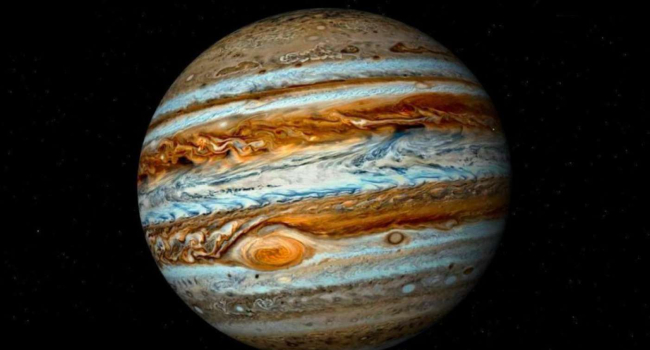
Starting on March 10, 2026, the planet Jupiter begins ending its apparent backward motion among the stars and gradually returns to its normal prograde (eastward) movement across the sky.
This transition is not visible in a single night—it unfolds over several days—but astronomers mark today as the moment when the change begins.
Why Jupiter sometimes appears to move backward
Normally, outer planets — Mars, Jupiter, Saturn, Uranus, and Neptune — move slowly eastward relative to the background stars.
However, from time to time they appear to:
- slow down
- stop
- move westward for several months
This phenomenon is called retrograde motion, and it is purely a matter of orbital geometry.
The reason is that Earth travels around the Sun faster than the outer planets. When Earth overtakes a slower outer planet, the viewing perspective changes.
It is similar to a car overtaking another on a highway: for a moment, the slower car seems to move backward relative to distant scenery.
For Jupiter, the retrograde phase began in November 2025, during which the planet slowly drifted westward through the constellation Gemini.
Today Jupiter reaches its stationary point, where the apparent motion reverses again.
What happens next
After this turning point, Jupiter will resume its normal eastward motion across the evening sky and remain visible through late June 2026.
Then several key events follow:
- June–July 2026: Jupiter approaches the Sun and becomes difficult to observe
- July 29, 2026: solar conjunction (when Jupiter is behind the Sun from Earth’s perspective)
- Mid-August 2026: the planet reappears in the morning sky as a “morning star”
- December 12, 2026: the next retrograde period begins
How to see Jupiter tonight
Right now Jupiter is one of the brightest objects in the night sky — second only to the Moon and sometimes Venus when visible.
You can easily spot it with the naked eye in Gemini on a clear evening.
With a telescope—or even a good pair of binoculars—you may also see:
- the four largest moons discovered by Galileo Galilei
- the cloud bands across Jupiter’s disk
These are the famous Galilean moons.
In brief
On March 10, 2026, Jupiter reaches its stationary point and begins transitioning from retrograde motion (which started in November 2025) back to normal eastward movement among the stars. The effect is purely an optical illusion caused by Earth overtaking Jupiter in its orbit. The planet will remain a bright evening object until June, disappear near the Sun in late July, and return to the morning sky in August.