make preferable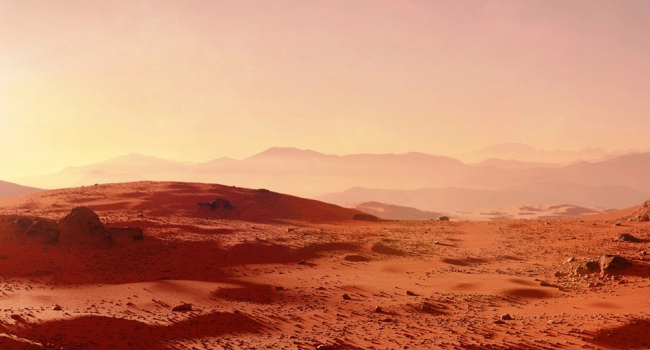
Scientists from the University of Pennsylvania, led by microbiology professor Corien Bakermans, have identified a surprising potential defense mechanism on Mars. Their research suggests that Martian regolith (soil) may be inherently toxic to Earth organisms — and that this toxicity can be removed by washing it with water.
The study, published in December 2025 in the International Journal of Astrobiology, offers a new perspective on planetary protection and on the possibility of growing plants on the Red Planet.
Experiment with tardigrades
According to Space.com, the research team set out to test how terrestrial organisms survive when exposed to Martian regolith. For the experiment, they used tardigrades, microscopic animals often called water bears, which are famous for their ability to survive extreme conditions.
The organisms were exposed to two Martian soil simulants:
- MGS-1, representing a generalized composition of regolith from across Mars
- OUCM-1, a precise replica of soil from the Rocknest site examined by the Curiosity rover in Gale Crater
The results were striking. In the MGS-1 simulant, tardigrades entered cryptobiosis — a state of complete dehydration and suspended metabolism — within just two days. The OUCM-1 simulant proved less toxic but still significantly suppressed biological activity.
Corien Bakermans explained that the team observed strong suppression of activity in MGS-1 after only two days, a much stronger effect than in OUCM-1. She added that the researchers were surprised by how toxic the material appeared to be, which led them to suspect that it contained a component that might be removed by water.
When the scientists washed the MGS-1 simulant with water, its toxicity dropped dramatically and the tardigrades were largely unaffected. This suggests that the harmful substance — likely salts or other soluble compounds — dissolves in water.
Protecting Mars from Earth microbes
For decades, NASA and COSPAR (the Committee on Space Research) have worked to prevent what could be described as a reverse “War of the Worlds”: the contamination of Mars by microbes from Earth. If life were ever discovered on Mars, the finding could be questioned if terrestrial bacteria had already been introduced there.
Because of this risk, spacecraft sent to Mars undergo strict sterilization procedures designed to ensure that the probability of transporting an Earth microbe is less than one in ten thousand.
If Martian regolith itself is toxic to Earth organisms, however, it could serve as a natural barrier against contamination. At the same time, washing the soil with water — potentially obtained from Martian ice — could make it suitable for growing plants without necessarily threatening any possible native biosphere.
Bakermans explained that the team was studying regolith both as a potential resource for plant cultivation in a future ecosystem and as a material that might contain inherent conditions capable of protecting Mars from contamination originating on Earth.
Implications for colonization
If the toxicity is indeed caused by water-soluble salts, it may be possible to neutralize it by washing the soil. In that case, Martian regolith could become the foundation for the first greenhouses on Mars, making it easier to grow food and produce oxygen for future missions.
The findings are still preliminary. Researchers will need additional experiments using actual Martian material — which is extremely rare on Earth — as well as tests involving more complex organisms.
Even so, the results already suggest that Mars may be less vulnerable to terrestrial life than scientists previously thought. That realization could influence both planetary protection policies and plans for future human missions and potential colonization of the Red Planet.
In brief
Researchers from the University of Pennsylvania discovered that the MGS-1 Martian regolith simulant is toxic to tardigrades, causing them to enter cryptobiosis within two days. The toxicity nearly disappears after the soil is washed with water. This suggests that Martian soil could act as a natural defense against Earth microbes while also becoming suitable for agriculture after treatment — an insight that could affect planetary protection strategies and future Mars colonization efforts.