make preferable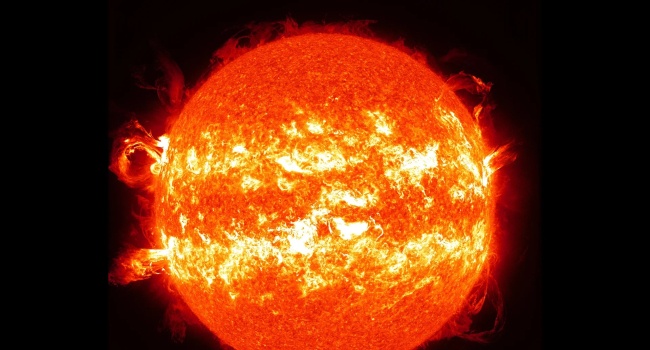
The Sun, which set records for powerful flares and radiation storms at the start of 2026, has now entered a phase of deep calm. The Laboratory of Solar Astronomy at the Space Research Institute of the Russian Academy of Sciences (IKI RAS) reports that flare activity on the visible side of the star has fallen almost to zero, and the remaining energy in sunspots could be exhausted within the next two to three days.
What Is Happening Now
“Small groups of sunspots that appeared on the solar disk over the past week are gradually using up their limited energy reserves and, at this rate, will completely exhaust them within the next 2–3 days,” the laboratory said in a Telegram post.
Over the past 24 hours, the rate of solar flares has dropped sharply, and the geomagnetic index remains in the calm zone. Two coronal holes are currently visible on the Sun — they will prevent activity from falling to absolute zero, but they are not expected to produce anything significant, such as G3–G4-level geomagnetic storms.
A Sign of Approaching Solar Minimum?
Evgeny Burmistrov, an expert from Perm Polytechnic University, previously explained that this type of behavior is a classic sign of the Sun’s “reset,” which occurs roughly every 11 years. At the end of February, for the first time in several years, there were days without a single visible sunspot on the solar disk — one of the key indicators of a transition toward solar minimum.
Solar Cycle 25, which began in 2019–2020, was relatively strong at its peak, but the star now appears to be losing momentum. A complete absence of sunspots and flares is not an anomaly, but a normal stage in the cycle. Scientists are not yet prepared to predict how long this “depression” will last — it could range from several weeks to several months.
What This Means for Earth
For the general public, this is good news: the coming days are expected to pass without strong geomagnetic storms, radio communication disruptions, or widespread auroras at mid-latitudes. The risk level also decreases for satellites, power grids, and aviation.
For solar physicists, however, this is a valuable research window. Such deep lulls make it possible to study the “quiet Sun” without interference from active regions and intense flare activity.
In Brief
Solar flare activity has dropped almost to zero: there are barely any sunspots left on the visible disk, and their remaining energy may be depleted within 2–3 days. This signals a transition toward the minimum of Solar Cycle 25. Geomagnetic conditions are calm, and no major storms are expected in the near future. A spotless Sun is a normal phase of the cycle — the last similarly “empty” solar disk was observed in December 2021.