make preferable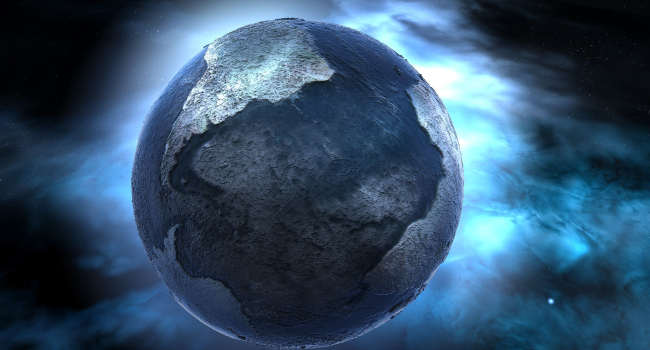
One of the longest and harshest ice ages in Earth’s history — the so-called “Snowball Earth” — lasted about 56 million years. For a long time, scientists explained such prolonged glaciation mainly by volcanic activity and fluctuations in atmospheric CO₂. However, new research from the University of Washington suggests that accelerated seafloor weathering may have played the decisive role in keeping the planet frozen. The study was published in the journal Geology.
How the “Deep Freeze” Mechanism Works
Geological evidence shows that more than 600 million years ago, Earth experienced at least two episodes of near-total glaciation. In one case, the ice persisted for tens of millions of years; in another, it lasted only about four million. Previously, scientists believed that the duration of these periods was determined primarily by volcanic carbon dioxide emissions: the more CO₂ released, the faster the planet would thaw.
However, computer modeling conducted by American researchers revealed a different picture. Across 10,000 simulations, scientists tracked how carbon moved between the atmosphere, ocean, and rocks. They found that with comparable levels of volcanic activity, prolonged global cooling was only possible if chemical reactions on the ocean floor accelerated dramatically.
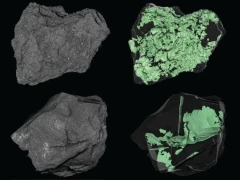
“When continents are covered in ice, weathering on land nearly stops. But seawater continues to seep into cracks in the oceanic crust. During what is known as seafloor weathering, water reacts with rocks, binding carbon into minerals and lowering atmospheric CO₂ levels,” the study’s authors explained.
According to their calculations, during the extended glaciation this process occurred 25 to 53 times faster than it does today. The ocean floor effectively became a massive greenhouse gas sink, preventing the planet from warming quickly.
An Additional Factor: Ocean Chemistry
Another crucial condition was the low concentration of sulfates in seawater. When sulfate levels are low, minerals are less effective at sealing cracks in the crust. As a result, porosity remains higher, water circulation increases, and chemical reactions continue more actively. This created a feedback loop: the colder the planet became, the slower it could warm — and the longer the glaciation lasted.
Why This Changes Our Understanding
Until now, most attention has focused on volcanoes and atmospheric CO₂ as the main drivers of global freeze-and-thaw cycles. The new findings suggest that ocean chemistry and processes on the seafloor may have been just as important — and in some cases decisive. This offers a new perspective on how the planet emerges from global glaciations and why some ice ages lasted far longer than others.
The research also helps explain why certain glacial periods were relatively short while others stretched on for tens of millions of years. The duration depends not only on external factors such as volcanic activity and orbital variations, but also on internal geochemical cycles within the ocean.
In Brief
Scientists at the University of Washington have proposed that accelerated seafloor weathering was the key reason one “Snowball Earth” episode lasted 56 million years. While ice-covered continents stopped absorbing CO₂, the ocean continued to bind carbon into minerals, reducing the greenhouse effect 25–53 times faster than today. Low sulfate concentrations further enhanced water circulation and sustained the process. In other words, ocean chemistry — not just volcanoes — may have determined the length of global glaciations.