make preferable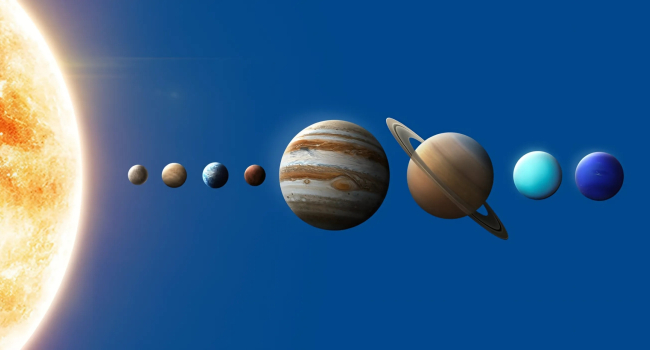
In the final days of February 2026, skywatchers will have a chance to witness a striking astronomical event — a six-planet alignment. The reminder was published by NASA on its official website.
“On February 28, we will see not one, not two, but six planets in the evening sky. Mercury, Venus, Neptune, Saturn, Uranus, and Jupiter will appear shortly after sunset,” the agency said.
Which Planets You Can See — and How
All six planets will line up roughly along the same side of the Sun. However, what you’ll actually be able to see depends largely on each planet’s brightness.
Visible to the naked eye — Venus, Jupiter, Saturn, and Mercury.
These planets will appear in the evening sky shortly after sunset and should be visible even from cities under clear conditions. Venus will once again shine as the brightest “evening star,” while Jupiter and Saturn should also be relatively easy to spot low in the southwestern sky.
Requiring binoculars or a telescope — Uranus and Neptune.
These two planets are too faint to see without optical aid, especially against the glow of twilight and city lights.
NASA emphasizes that observing Uranus and Neptune will require at least a small telescope or good binoculars, and the best conditions will be under dark skies away from urban light pollution.
Why It May Be Difficult in Major Cities
According to experts, residents of large cities may struggle to see the full alignment. Because the planets will cluster on one side of the Sun, they will appear close to the glow of the evening twilight. Even bright planets can be washed out in these conditions, particularly in areas with significant artificial lighting.
The best chances will be in southern latitudes or locations with a clear, unobstructed southwestern horizon and minimal light pollution. In northern regions, lingering twilight may interfere more strongly with observations.
When and Where to Look
Date: Evening of February 28, 2026 (and partially into the night of March 1)
Time: Shortly after sunset, while the sky is darkening
Direction: Southwestern horizon (for most locations in the Northern Hemisphere)
If weather conditions allow, heading outside the city with at least a pair of binoculars will significantly increase your chances of seeing the four bright planets — and possibly Uranus and Neptune as well.
In Brief
On February 28, 2026, six planets — Mercury, Venus, Saturn, Jupiter, Uranus, and Neptune — will align in the evening sky after sunset. Under good conditions, four of them (Venus, Jupiter, Saturn, and Mercury) will be visible to the naked eye, while Uranus and Neptune will require binoculars or a telescope. In cities, observation may be hampered by twilight and light pollution, so darker locations outside urban areas are recommended. While beautiful, such alignments are not extremely rare — similar planetary groupings occur several times a year, though visibility always depends on weather and horizon conditions.