make preferable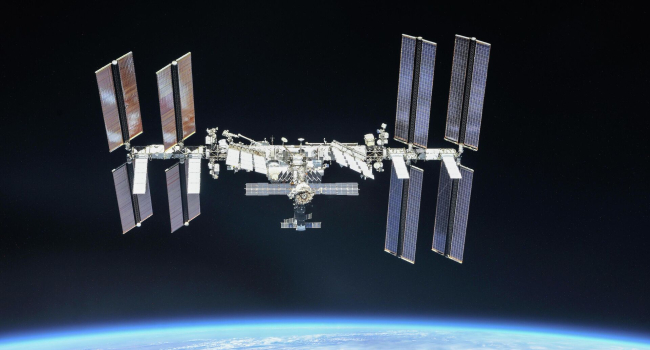
For the first time aboard the International Space Station (ISS), researchers conducted an experiment in biomining metals from meteorites using living microorganisms. The results point toward the possibility of creating autonomous resource-extraction systems in space, where transporting materials from Earth is prohibitively expensive. The study was carried out by scientists from Cornell University and University of Edinburgh, while the experiment itself was performed by NASA astronaut Michael Scott Hopkins.
How the Metals Were Extracted
Two different microorganisms were selected for the test: the bacterium Sphingomonas desiccabilis and the fungus Penicillium simplicissimum. They were chosen deliberately because they interact with minerals in different ways.
Lead author Rosa Santomartino, a professor at Cornell University, explained that the team selected two very different species because they extract different elements. The goal was to understand what exactly was happening while keeping the findings broadly relevant, since very little is known about how microbial behavior changes in space.
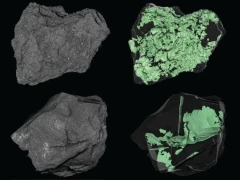
The microbes extracted metals by releasing carboxylic acids, which bind to minerals in the meteorite and dissolve them into solution. The process was studied under microgravity conditions and compared with identical experiments conducted on Earth.
What Changed in Space
In microgravity, the fungus Penicillium simplicissimum significantly altered its metabolism, producing more molecules — including the very carboxylic acids responsible for dissolving minerals. As a result, greater amounts of palladium, platinum, and other elements were extracted from the meteorite sample.
Santomartino noted that another complex but highly interesting finding was that extraction rates varied greatly depending on the type of metal, the species of microbe, and the gravitational conditions.
While the method worked both on Earth and in orbit, the fungus proved noticeably more efficient in space for certain metals. This opens the door to developing bioreactors that could operate directly on asteroids or the Moon.
Why It Matters
Resource extraction in space is considered one of the key ways to reduce the cost of long-duration missions. Instead of transporting tons of material from Earth, future missions could rely on local resources from asteroids or lunar regolith. Palladium, platinum, and other platinum-group metals are worth thousands of dollars even in small quantities and are essential for electronics, catalysts, and fuel cells.
Most asteroid-mining initiatives — including companies such as AstroForge — currently focus on technologies like lasers and magnetic separation. Biological methods using microbes represent an alternative and potentially more energy-efficient approach, especially for long-term space bases.
Prospects and Limitations
The results are still preliminary, and researchers emphasize that there are many variables involved, making it too early to draw definitive conclusions. However, the experiment demonstrated that microbes can behave differently in space — and in some cases more effectively than on Earth. This provides a new tool for future resource-extraction missions on the Moon, Mars, or asteroids.
In Brief
On the ISS, NASA astronaut Michael Hopkins conducted the first biomining experiment on meteorites using the bacterium Sphingomonas desiccabilis and the fungus Penicillium simplicissimum. In microgravity, the fungus increased its production of carboxylic acids and extracted more palladium and platinum than under Earth conditions. The experiment paves the way for autonomous bioreactors designed to mine resources in space — an important step toward lowering the cost of deep-space missions.