make preferable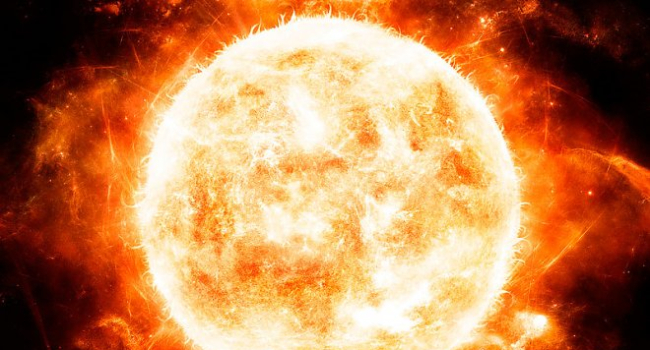
The Sun, which set records at the beginning of 2026 for the strength of radiation storms and the number of powerful flares, has suddenly gone quiet. There is currently not a single sunspot visible on the side facing Earth — not even the smallest one. This was reported by the Space Research Institute of the Russian Academy of Sciences (IKI RAS), specifically by its Laboratory of Solar Astronomy at IKI RAS.
In a Telegram post, the laboratory stated that not a single sunspot, even the smallest, was visible at the moment.
Why This Is Rare
Sunspots are regions of intense magnetic fields where the surface temperature drops by several thousand degrees. They are usually present almost continuously, especially during the maximum phase of Solar Cycle 25, which we are currently experiencing. The complete absence of spots on the visible solar disk is a sign of deep minimum activity. The last time this occurred was on December 11, 2021. In other words, for more than four years the Sun has not displayed such an “empty” disk.
Researchers at IKI RAS compared the current state to the beginning of a very prolonged depression. After a record-breaking January and early February, solar activity has plunged to its lowest level in the past two years — for the first time since April 2024.
They noted that the star, after breaking two records earlier this year — for the most intense radiation storm and for the highest number of strong flares from a single active region — now appears completely drained.
This week, only brief, isolated flares without obvious precursors were recorded, each followed by renewed calm. Scientists likened this behavior to the clearing out of the last remaining stock.
What Happens Next?
There is currently no clear indication of when or how this trend might reverse. A complete halt in activity is unlikely — the solar cycle is ongoing, and further bursts remain possible. However, the downturn could persist and become quite prolonged. Over the next few days or even weeks, the overall picture is unlikely to change dramatically.
For people on Earth, this means calm geomagnetic conditions: no major storms, no mid-latitude auroras, and minimal disruption to radio communications. For solar physicists, however, this is an interesting opportunity, as such deep lulls allow them to study the “quiet” Sun without interference from active regions.
In Brief
For the first time in four years (since December 2021), no sunspots are visible on the Sun’s Earth-facing side — the disk is perfectly clear. After a turbulent start to the year, solar activity has dropped to its lowest level in two years. Researchers at IKI RAS have described it as the beginning of a very prolonged depression and compared it to a final clearance of remaining activity. There are no signs of an imminent rebound, though a complete shutdown during an active cycle is unlikely. For Earth, this means relatively calm geomagnetic conditions in the coming days.