make preferable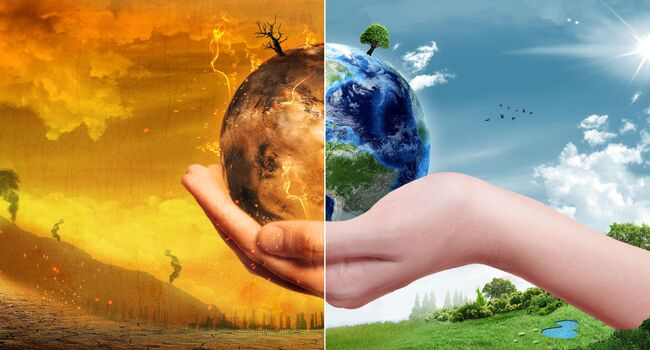
The world may be nearer to an irreversible climate scenario than previously thought. Ongoing global warming could trigger a chain reaction of climate tipping points, after which stopping the process would be nearly impossible. As a result, the planet could shift into a so-called “Hothouse Earth” state—a far hotter and more hostile climate than even the worst projections of 2–3°C warming. This is outlined in a new review published in the journal One Earth.
What Is “Hothouse Earth”?
The “Hothouse Earth” scenario implies global temperatures stabilizing at more than 4°C above preindustrial levels—and remaining there for thousands of years. This would lead to a dramatic rise in sea levels, flooding of coastal megacities, mass ecosystem die-offs, and a radical transformation of living conditions.
Scientists emphasize that such a climate would differ fundamentally from the relatively stable and favorable conditions of the past 11,000 years—the period during which human civilization emerged and developed.
Even with today’s warming of about 1.3°C, extreme weather already claims thousands of lives each year and devastates economies worldwide. At 3–4°C, experts warn, “the economy and society will cease to function in the way we are accustomed to.” A “Hothouse Earth” would be even more severe.
Tipping Points Are Already Approaching
The review’s authors analyzed 16 key components of the Earth system that could become tipping elements, including:
- The Greenland and West Antarctic ice sheets
- Mountain glaciers
- Arctic sea ice
- Subarctic forests and permafrost
- The Amazon rainforest
- The Atlantic Meridional Overturning Circulation (AMOC)—a system of ocean currents that influences the global climate
Some of these systems are already showing signs of instability: melting in Greenland and West Antarctica, weakening of the AMOC, and critical thresholds looming for permafrost, mountain glaciers, and the Amazon.
“Crossing even some of these thresholds could commit the planet to a Hothouse Earth trajectory,” said Dr. Christopher Wolf of Terrestrial Ecosystems Research Associates (USA), one of the study’s authors.
Public and Policymakers Are Largely Unaware
The authors stress that most people—and many policymakers—do not realize how close we may be to the point of no return.
“Policymakers and the public are largely unaware of the risks associated with a transition that would effectively be irreversible,” Wolf noted.
“Global temperatures are likely already as warm as, or warmer than, at any time in the past 125,000 years, and climate change is occurring faster than many scientists expected.”
Atmospheric CO₂ levels are likely the highest in the past 2 million years.
Professor Tim Lenton of the University of Exeter added: “We know that on the current climate trajectory we face serious risks that could lead to a much less habitable state. Even without a shift to Hothouse Earth, at 3°C of warming humanity and societies would face profound risks.”
Domino Effect and the Urgency of Action
Triggering one tipping point could set off a cascade. For example, a weakening AMOC increases the risk of Amazon dieback, while carbon released from a collapsing rainforest would intensify warming and interact with other feedback loops.
“We need to act quickly while rapidly shrinking opportunities remain to prevent dangerous and unmanageable climate outcomes,” said Professor William Ripple of Oregon State University, who led the analysis.
Scientists warned about a similar “Hothouse Earth” scenario back in 2018, writing that the consequences for human societies would be “far-reaching, sometimes abrupt, and undoubtedly disruptive.”
In Brief
The world is approaching a point of no return, where triggering climate tipping points—ice sheets, the Amazon, the AMOC, permafrost, and others—could lead to an irreversible “Hothouse Earth” scenario: a scorching climate lasting thousands of years, with catastrophic sea-level rise and the collapse of familiar living conditions. Destruction is already occurring at 1.3°C of warming; at 3–4°C, society may no longer function as it does today. Most people and policymakers remain unaware of the risks. The authors call for immediate, radical emissions cuts—once the chain reaction begins, there will be no turning back.