make preferable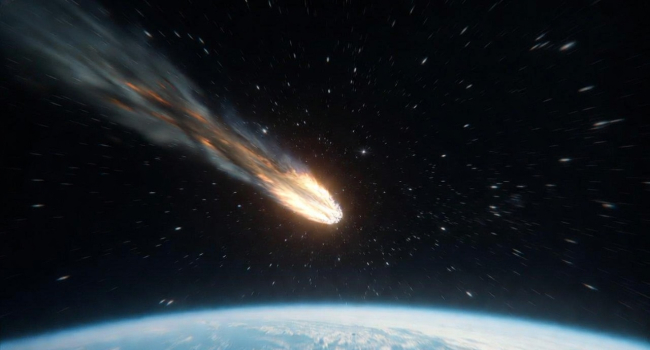
On February 14, 2026—Valentine’s Day—a celestial giant, asteroid 162882 (2001 FD58), will race past Earth. It is the largest object in the past year to approach our planet at a relatively close distance, according to the press service of the Laboratory of Solar Astronomy at the Russian Academy of Sciences’ Space Research Institute (IKI RAS).
Size and Trajectory
The asteroid’s diameter is estimated at between 0.5 and 1 kilometer (roughly 500–1,000 meters). It will pass at a safe distance—several million kilometers from Earth—making it the largest object to enter the zone of potential hazard (a radius of about 7.5 million km) over the past 12 months.
Scientists emphasize that there is no real threat. The probability of a collision is zero. The asteroid stands out only because of its size; by comparison, most passing objects are significantly smaller.
Potentially Hazardous Objects in 2026
The IKI RAS statement also mentions other asteroids that are of interest to planetary defense specialists. The nearest large object with a nonzero—albeit extremely small—probability of impact is 2017 SH33, with a diameter of about 1 kilometer. According to the European Space Agency (ESA), the chance of it colliding with Earth on April 30, 2026, is estimated at roughly 1 in 150 million.
The highest formal probability in 2026 belongs to the tiny 10-meter asteroid 2013 TP4. Its chance of striking Earth on October 1, 2026, is about 1 in 45,000. Even so, such figures still fall into the category of “virtually impossible,” highlighting how carefully even small bodies are tracked.
Why It Matters
A flyby of a kilometer-scale asteroid is a relatively rare event, even for modern telescopes. Objects like this help astronomers refine orbital models, test early warning systems, and rehearse planetary defense scenarios, such as the DART mission or future kinetic deflection strategies.
Although 162882 (2001 FD58) poses no danger, its flyby is a good reminder that Earth is not alone in space—and that monitoring systems (including NASA CNEOS, ESA, IKI RAS, and others) operate around the clock to ensure that any real risk is detected long before it becomes a threat.
In Brief
On February 14, 2026, asteroid 162882 (2001 FD58), measuring 0.5–1 km in diameter, will pass Earth—the largest such object in the past year. It will remain several million kilometers away, posing no threat (collision probability: zero), and is the biggest object to enter the potential hazard zone in the last 12 months. Among other monitored risks in 2026 are 2017 SH33 (1 km; a 1-in-150-million chance on April 30) and 2013 TP4 (10 m; a 1-in-45,000 chance on October 1). Everything remains under control, and observations continue.