make preferable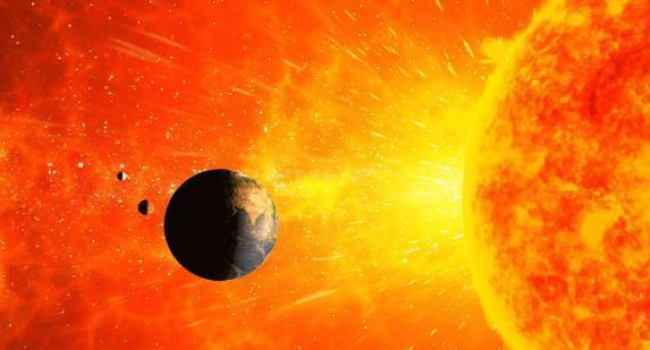
Solar activity in early February 2026 has reached a new level, and its effects are already being felt on Earth. The Solar Astronomy Laboratory of the Russian Academy of Sciences’ Space Research Institute (IKI RAS) has reported the detection of planetary-scale magnetic storms. So far, their intensity is classified as weak, but the situation could change quickly.
What Is Happening Right Now
According to IKI RAS, instruments recorded the onset of geomagnetic disturbances at the G1 level on the morning of February 5 (minor storms on NOAA’s five-level scale). Scientists warn: “The current level is G1 (minor storms), but it may increase to G2–G3 within the next 24 hours.”
These storms are not caused by a single solar flare but represent the Earth’s magnetosphere responding to exceptionally high solar activity observed since the beginning of the month. Plasma clouds ejected by the Sun in recent days are gradually reaching our planet, creating a cascade of effects.
Bright auroras have already flared up across the Western Hemisphere. Over Canada and the northern United States, they reached the maximum tenth intensity, meaning the northern lights are visible even at mid-latitudes where they are usually rare. In Russia, the picture is expected to become clearer in about ten hours, when the day-night boundary shifts toward the European part of the country — the moment when auroras may become visible there as well.
The Cause: A Surge in Solar Activity
It all began when active regions on the Sun rotated into a position directly affecting Earth on February 3. By February 4, a true barrage of flares had erupted. Eight major M-class flares (the second most powerful category before the maximum X-class) were recorded in a single day.
The first occurred at 01:50 Moscow time with a strength of M2.0. Later, even stronger events were detected, including an M4.9 flare that lasted 24 minutes. Overall, more than 20 flares were recorded on February 4, including 12 M-class events and one X-class flare.
Such a concentration of activity is a sign that Solar Cycle 25 is entering its peak phase. Scientists note that several top-tier X-class flares have already occurred in the first days of February, with the total number of major events reaching into the dozens.
What to Expect Next
For now, the storms remain relatively mild and pose no serious threat to infrastructure. However, if they intensify to G2–G3, radio communication interference, minor power grid fluctuations at high latitudes, and brighter auroras are possible. For most people, this is more of a spectacular sky show than a problem, though weather-sensitive individuals may experience discomfort.
Solar activity remains elevated, so the coming days will require close monitoring. Forecasts are being refined as new data arrives from satellites and ground-based observatories.
In Brief
On February 5, 2026, planetary-scale magnetic storms at the G1 level began affecting Earth, with a possible escalation to G2–G3 within 24 hours. The cause is a series of powerful M-class solar flares on February 4 and heightened activity since the start of the month. Bright auroras are already visible in Canada and the United States, with sightings expected later in Russia. This is a typical response of Earth’s magnetosphere to a solar surge during the peak of Solar Cycle 25.