make preferable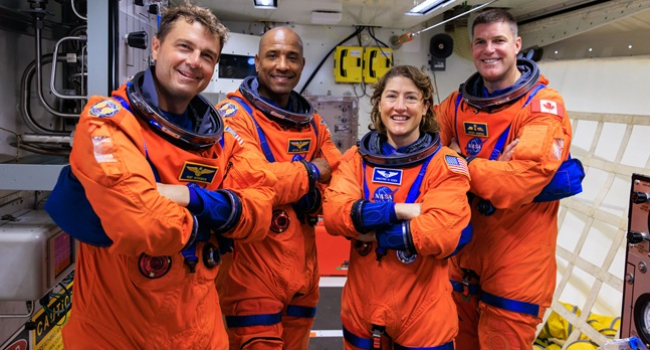
On February 2, 2026, a key test ahead of the first crewed mission to the Moon in the 21st century will take place at the launch site at Cape Canaveral, Florida: a full dress rehearsal of the Artemis II launch. NASA announced this in an official statement.
What will happen on February 2
The Space Launch System (SLS) rocket with the Orion spacecraft is already positioned on the launch pad. During the rehearsal, specialists will carry out the entire sequence of prelaunch operations:
- loading of cryogenic propellants (liquid hydrogen and liquid oxygen);
- checks of all rocket, spacecraft, and ground support systems;
- rehearsal of countdown procedures;
- draining of propellants after the test is complete.
There will be no crew aboard Orion — this is a fully uncrewed test. The goal is to confirm that all systems operate in sync and are ready for an actual launch.
Crew and flight preparations
Four astronauts — Reid Wiseman, Victor Glover, and Christina Koch of NASA, along with Jeremy Hansen of the Canadian Space Agency — have been preparing for the mission since June 2023. The flight is expected to last about 10 days. It will be the first crewed mission beyond low Earth orbit since 1972.
Training includes:
- studying the Orion spacecraft and SLS rocket systems;
- practicing autonomous decision-making (the crew must be able to act independently if communication with Earth is disrupted);
- training in Orion Crew Survival System spacesuits;
- simulations of all phases of flight (launch, orbit, lunar flyby, atmospheric reentry, and splashdown);
- geological training for observing the Moon from orbit;
- practicing splashdown and spacecraft egress under various scenarios.
“Training for Artemis II is all about risk reduction. By preparing astronauts and flight controllers for a wide range of situations, we ensure mission success,” said Artemis II lead trainer Jackie Mahaffey.
Why the mission matters
Artemis II is the first crewed mission of the Artemis program, which aims to return humans to the Moon. This mission will not include a landing — that is planned for Artemis III — but instead a lunar flyby to test all critical systems, including the SLS rocket, the Orion spacecraft, spacesuits, and operational procedures.
The mission will mark the first time humans have traveled beyond low Earth orbit since 1972. The success of Artemis II is a crucial step toward returning to the Moon and laying the groundwork for future missions to Mars.
In brief
On February 2, 2026, NASA will conduct a full dress rehearsal of the Artemis II launch, including fueling the SLS rocket, verifying all systems, and practicing prelaunch procedures with no crew aboard. This will be the final major test before the first crewed lunar flyby of the 21st century, scheduled for the first months of 2026. The crew — Reid Wiseman, Victor Glover, Christina Koch, and Jeremy Hansen — has already completed extensive training, from simulations and geology to splashdown drills. A successful rehearsal will be a decisive step toward humanity’s return to the Moon.