make preferable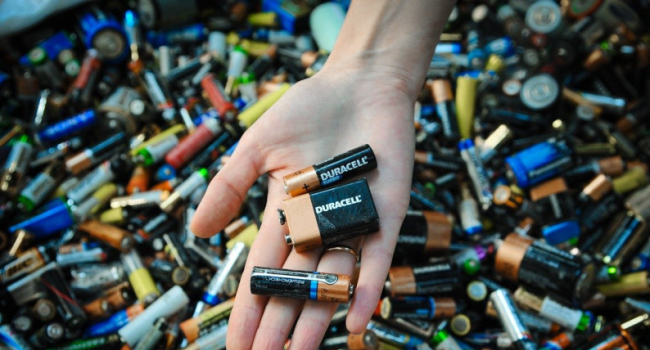
Around the world, batteries and accumulators have long been classified as hazardous waste. They contain heavy metals and toxic substances that must not be thrown into ordinary trash. In Armenia, however, public awareness of proper handling rules remains low, and used batteries often end up directly in garbage bins. Even those who understand the risks frequently do not know where to take used batteries in order to comply with the law and avoid harming the environment.
Armenian legislation does recognize the environmental danger posed by batteries and accumulators. It states that handling such waste is subject to mandatory licensing. This means that only organizations that have received special state permission are allowed to collect, store, and process them.
At the same time, for a long period there was no system accessible to ordinary citizens for returning used batteries. Regulation appeared before infrastructure. As a result, an absurd situation emerged: throwing batteries into the trash is environmentally unacceptable, collecting them separately is legally prohibited, and there is nowhere to hand them in.
Environmental NGOs tried to fill this gap. Several years ago, the Green Green activist group launched a battery collection campaign, installed containers, and carried out educational activities. This looked like standard practice in many European countries.
In Armenia, however, the initiative ended with a fine. The Green Green organization was fined 555,000 drams for collecting hazardous waste without a license, and all collected batteries were confiscated. The court confirmed that even if the goal is environmental protection, acting without official authorization is illegal. This precedent became a warning to the entire civil sector that environmental activism without a license constitutes an offense.
In 2024, a system for collecting used batteries and accumulators finally started operating in Armenia. Collection points were opened in all Vega store locations in Yerevan, and the project is planned to expand to other cities in September. Most household batteries and accumulators are accepted, from standard AA and 9V batteries to lithium-ion batteries from phones, laptops, and power tools. Car batteries, electronic cigarettes as complete devices, and equipment with non-removed batteries are not accepted.
The company explains that collected batteries are sorted and stored in a licensed facility until a volume sufficient for further processing is accumulated. In the future, the purchase or rental of specialized recycling equipment is planned. At present, Vega remains the only company in the country holding a license for the collection, storage, and processing of hazardous waste, including power cells.
Even so, difficulties remain. Not everyone is aware that this system exists, and Vega stores are not located in all cities. Currently, used batteries can be legally handed in in Yerevan, as well as in Gavar, Ijevan, Meghri, Kapan, Vanadzor, Gyumri, Masis, Hrazdan, Tashir, and Spitak. Residents of other cities, such as Ashtarak, must either violate the law or travel to Yerevan each time they need to dispose of batteries from remote controls or devices. Collecting them at home and storing several pieces between replacements is already considered storage of hazardous waste and is prohibited by law.
As a result, every resident of the country is forced to choose between breaking the law by throwing batteries into the trash or organizing a trip to the nearest collection point. Until the infrastructure expands across the entire country, environmental responsibility will remain more a matter of bureaucratic rules than a practical action accessible to ordinary people.