make preferable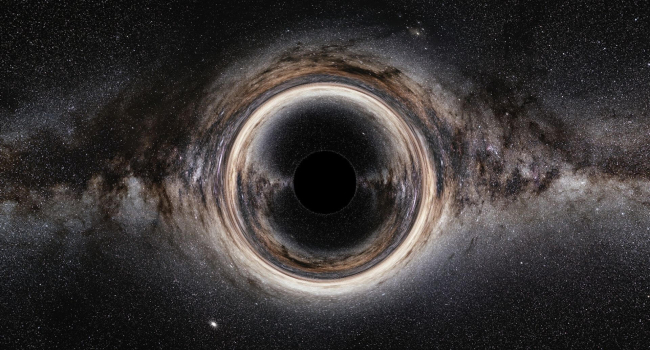
Since the launch of the James Webb Space Telescope in 2022, astronomers have faced a serious puzzle. Supermassive black holes with masses of millions or even billions of Suns are being found only about 500 million years after the Big Bang. According to standard models, such objects should need at least a billion years to grow so large. A new study suggests a solution: in the early Universe, black holes may have entered a phase of extreme “feeding frenzy,” growing faster than the famous Eddington limit allows. The work was published on January 21, 2026, in Nature Astronomy.
Supermassive black holes as six-year-old giants
Supermassive black holes sit at the centers of almost all large galaxies in the modern Universe. Their growth over 13.8 billion years can be explained through mergers and the steady accretion of gas and stars. The problem is that JWST regularly detects such objects at a time when the Universe was only 500 to 700 million years old.
Earlier, team member John Regan explained this by comparing it to seeing a family walking down the street in which two teenagers of normal height are accompanied by a six-year-old child who is just as tall, and wondering how such a small child could have grown so quickly.
An avalanche of super-accretion
The team led by Daxal Mehta from Maynooth University carried out detailed computer simulations of the early Universe. They showed that in the chaotic, gas-rich first galaxies, black holes could briefly enter phases of extreme overfeeding that exceeded the Eddington limit.
The Eddington limit represents the balance between gravity pulling gas inward and radiation pressure pushing it outward. Under normal conditions, radiation quickly blows away infalling material and stops growth. In the simulations of the early Universe, first-generation black holes formed from massive stars were able, for short periods, to overcome this barrier and swallow matter tens of thousands of times faster than usual.
In a similar context, although speaking about dark matter rather than black holes, Steven Heinrich from the University of Minnesota had pointed out that an object could be born extremely hot and still have time to cool before galaxies formed. The underlying idea, that extreme initial conditions do not necessarily prevent later evolution into the observed state, applies here as well.
From “light” seeds to supermassive monsters
The results show that even “light seeds,” black holes with masses of only tens to hundreds of Suns, could rapidly grow to tens of thousands of solar masses. This would give them a strong head start for later mergers and accretion, eventually producing supermassive black holes.
Previously, it was thought that “heavy seeds,” with masses up to about 100,000 Suns and forming only under rare conditions, were required. Now it appears that ordinary black holes born from supernovae could grow at extreme rates in the right environments of the early Universe.
Regan emphasized that the early Universe was far more chaotic and turbulent than previously expected, and that it likely contained many more massive black holes than standard models had predicted.
How the hypothesis can be tested
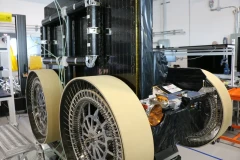
The theory can be tested through gravitational waves produced by mergers of these “infant” black holes. These signals will be searched for by the space-based gravitational-wave observatory LISA, scheduled for launch in 2035. If the hypothesis is correct, LISA should detect many mergers originating in the early Universe.
In brief
Scientists have shown that supermassive black holes in the early Universe could have grown at extreme rates thanks to short-lived phases of “feeding frenzy” that exceeded the Eddington limit. This explains why JWST finds such objects only about 500 million years after the Big Bang. Even light seeds with masses of tens to hundreds of Suns could grow to tens of thousands of solar masses in the chaotic conditions of the first galaxies. This discovery may change our understanding of how black holes and galaxies evolved. Future observations of gravitational waves by LISA will help confirm the idea.