make preferable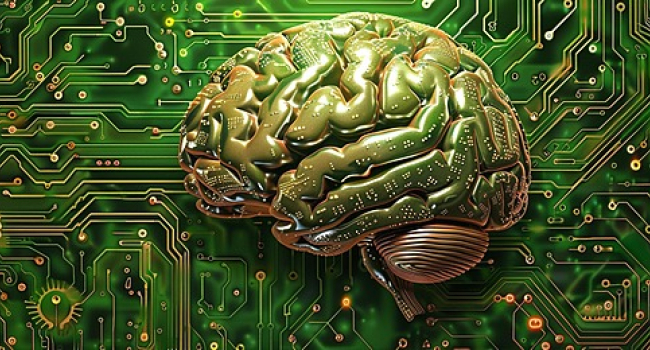
A team working on the Fugaku supercomputer has launched the largest and most accurate simulation of a mouse’s cerebral cortex to date: 9 million neurons and 26 billion synapses operating as a unified system. The results were presented at the SC25 conference.
A Breakthrough in Scale and Speed
Researchers from the Allen Institute (USA) and the University of Electro-Communications (Japan) modeled 86 interconnected cortical regions, synchronizing quadrillions of operations per second. While a real mouse brain contains around 70 million neurons, the current model covers roughly 13% of that volume — yet already makes it possible to watch, in real time, how waves of activity travel through the virtual brain and how disturbances in one region influence the others.
Anton Arkhipov, head of the computational group at the Allen Institute, noted that this represented a technical breakthrough. He stated that it was the first time researchers could clearly see that such simulations were viable when enough computing power was available. Arkhipov added that the results suggest scaling to much larger brain models, including the human brain, is not just theoretically possible but realistically achievable in the foreseeable future.
Why a Virtual Brain Matters
The model is already being used to study:
• synchronization of brain waves;
• interaction between hemispheres;
• mechanisms of attention and cognitive processes.
Unlike experiments on living tissue, this simulation allows researchers to instantly “switch off” individual neurons or entire regions and observe what happens. This opens the door to modeling epilepsy, disorders of consciousness, and neurodegenerative diseases without invasive procedures on living organisms.
Next: A Full Mouse Brain, Then a Human One
Scientists are now working on expanding the model to encompass the full mouse brain (70–100 million neurons). In the long term, the goal is a digital analogue of the human brain with its 86 billion neurons. Achieving that will require next-generation exaflop-class supercomputers expected between 2027 and 2030.
In Brief
The Fugaku supercomputer now runs the most detailed simulation of the mouse cortex ever created — 9 million neurons and 26 billion synapses operating in real time. The model already enables the study of excitation waves and cognitive processes without animal experimentation. Researchers believe that a complete virtual mouse brain, followed by a human one, will emerge within the coming years. Neuroscience is entering the era of ultra-large digital brain models.