make preferable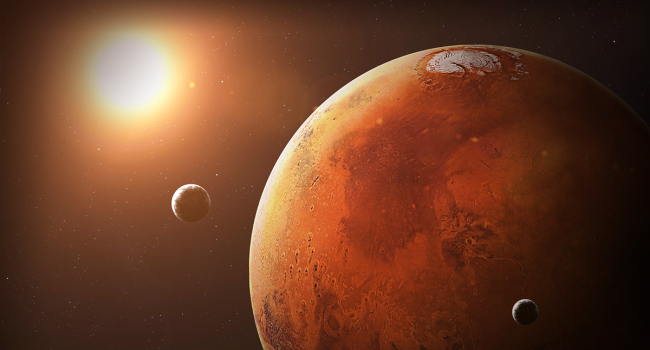
The U.S. National Aeronautics and Space Administration (NASA) has confirmed plans for a crewed mission to Mars in the early 2030s. Acting NASA Administrator Sean Duffy announced this in an interview with Fox News. The mission is considered a key stage in the “second space race,” where the United States aims to outpace other countries, including China, in the exploration of Mars.
Main Mission Details
- Timeline: Launch is planned for the early 2030s, with possible departure in 2033 or 2035, when the orbital paths of Earth and Mars create an optimal launch window (every 26 months).
- Duration: The flight will take about 6–8 months one way. Astronauts will spend up to 500 days on the surface of Mars before returning to Earth. The total mission length will be around 2 years.
- Objectives: Scientific research, study of Martian geology, search for signs of past or present life, and preparation for future long-term missions.
- Preparation: NASA is using the Artemis program to test technologies on the Moon. Artemis missions, including Artemis III (planned for 2026), will help trial life support systems, spacesuits, and methods of extracting resources such as water for future Martian expeditions.
Technological Aspects
- Rocket and spacecraft: The mission will use NASA’s most powerful rocket, the Space Launch System (SLS), and the Orion spacecraft to deliver the crew. A Deep Space Habitat module for extended space stays is also being considered.
- Resources: About 25 tons of equipment, including a rover and a lander, will be delivered in advance by robotic missions. These will provide the astronauts with fuel, food, and equipment.
- Radiation: Protection against cosmic radiation is one of the key challenges. NASA is testing new shielding technologies on the International Space Station (ISS) and plans to use the lunar Gateway station to simulate Martian conditions.
- Reducing flight time: Scientist Jack Kingdon of the University of California has proposed a method that could shorten flight duration to 90–104 days using modern technology. This could reduce astronauts’ exposure to radiation and microgravity, though the technology is still under research.
Preparation Through Artemis
The Artemis program plays a central role in preparing for Mars:
- Lunar base: NASA plans to establish a base camp on the Moon, where astronauts will practice extended stays in conditions similar to those on Mars.
- Technology testing: The Moon will serve as a testing ground for life support systems, radiation-protected spacesuits, and methods of extracting water from ice — all essential for future Mars missions.
- Gateway: The lunar orbital station will act as a platform for simulating Martian missions, including six-month stays under low-gravity conditions.
Challenges and Risks
- Radiation: Mars lacks a magnetic field, increasing exposure to cosmic rays. NASA is developing new shielding materials to protect crews.
- Mission duration: Extended stays in microgravity and on Mars (with only 38% of Earth’s gravity) may cause muscle and bone loss. Research on the ISS and in analog missions such as CHAPEA helps study these effects.
- Funding: The mission could cost about $17 billion for an orbital flight (planned for 2033) or more for a landing. NASA’s budget growth remains uncertain, especially amid shifting political priorities.
- Competition: China is also planning crewed missions to Mars in the 2030s, increasing the competitive pressure.
Alternatives and the Private Sector
Elon Musk’s company SpaceX plans to send humans to Mars earlier than NASA — in the late 2020s or early 2030s — using the Starship rocket. SpaceX is already partnering with NASA under the Artemis program, and its technologies may complement government-led missions.
Other initiatives also exist: Blue Origin and other companies are developing technologies for Mars missions, including orbital telecommunications systems.
Significance of the Mission
A crewed Mars mission would be a landmark achievement for science and humanity:
- Scientific discoveries: Studying Martian geology and atmosphere will shed light on the history of the Solar System and the potential for life.
- Technological progress: Innovations for Mars, such as nuclear propulsion or advanced life support systems, could also benefit Earth.
- International cooperation: NASA works with ESA and other partners, which may strengthen global space exploration efforts.
In Summary
NASA is actively preparing to send astronauts to Mars in the early 2030s, building on the experience of the Artemis program and robotic missions. Despite its ambitious goals, the mission faces technical, financial, and medical challenges. Success will depend on innovations — such as the proposed method to shorten flight time to 90 days — and on cooperation with the private sector. This mission promises to mark a new chapter in space exploration, reinforcing the U.S. position in the “second space race.”