make preferable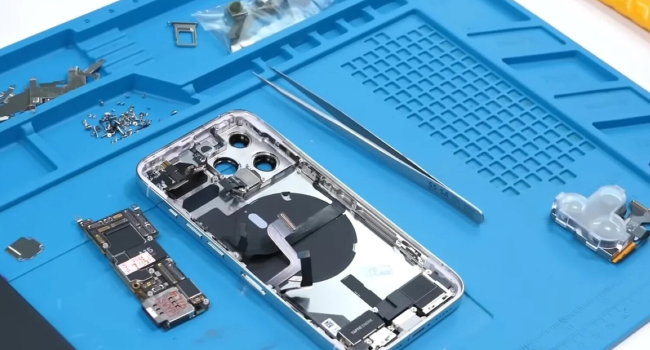
Canadian blogger Phone Repair Guru set out to determine if it’s possible to build an iPhone 13 Pro using components from AliExpress and how much cheaper it would be compared to a new smartphone. His goal was to uncover the true cost of the components, excluding the brand, marketing, and packaging. The result was striking: a fully functional iPhone 13 Pro for just $373, a fraction of the retail price.
Purchasing the Components
Chassis and Basic Elements
The blogger started by purchasing a chassis for $65. It came pre-equipped with a charging port, speakers, a wireless charging coil, and a vibration motor. The chassis quality was impressive, though the Apple logo had to be covered due to copyright concerns.
Motherboard and Face ID
The most expensive component was the motherboard, costing $161. It included the front camera, dot projector, and infrared module for Face ID. Likely a used part, the motherboard still enabled Face ID to activate seamlessly.
Camera and Display
The camera cost $56 and appeared to be original, as indicated by markings on the cable. The OLED display was priced at $84. It was slightly thicker than the original with wider bezels but performed reliably.
Battery and Sensors
The battery closely resembled the standard version, complete with markings and adhesive strips. Additional purchases included proximity and ambient light sensors, as well as a LiDAR module, all essential for full functionality.
Assembly Process
Assembling the smartphone was a true challenge. Without instructions or a screw placement diagram, the blogger had to proceed with extreme caution. A wrong screw or careless movement could damage fragile components. Despite the difficulties, Phone Repair Guru successfully completed the manual assembly.
Experiment Results
Once assembled, the smartphone powered on, with core features—camera, Face ID, and display—working flawlessly. The vibration motor was slightly weaker than the original, but this didn’t impact overall functionality. The custom-built iPhone 13 Pro demonstrated stable performance, proving that high-quality AliExpress components can form the basis of a fully operational smartphone.
What Does This Mean for Consumers?
Phone Repair Guru’s experiment reveals that a significant portion of the iPhone’s cost stems from the brand, assembly, and marketing. With skills and patience, it’s possible to build a working smartphone for a third of the price of a refurbished device and far less than a new one. However, the process demands expertise, and the quality of AliExpress parts can vary, posing certain risks.
Key Takeaways
The Canadian blogger’s project is not only a fascinating experiment but also a prompt to reflect on the true cost of technology. Assembling an iPhone 13 Pro for $373 is a remarkable feat, highlighting the accessibility of components on modern marketplaces. For most users, buying a ready-made device remains the practical choice, but such experiments inspire enthusiasts and repair experts.