make preferable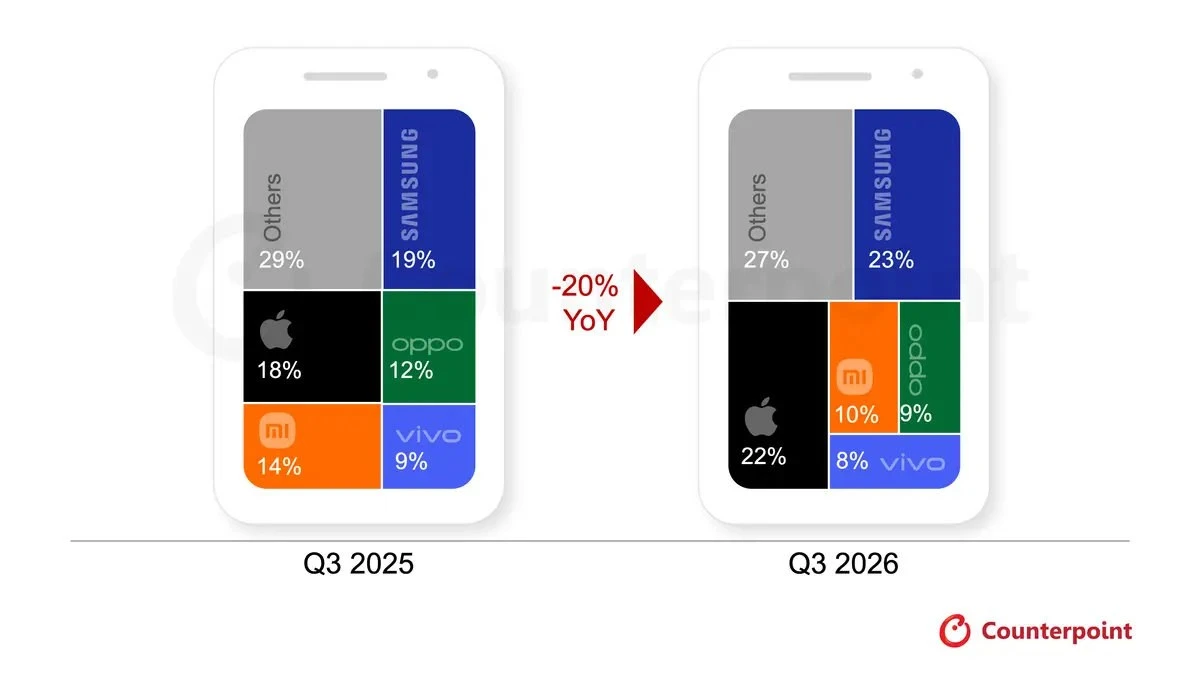
In the third quarter of 2026, global smartphone shipments fell by 20% compared with the same period last year. This is the worst third-quarter result in 14 years, Counterpoint Research reports. Against the backdrop of the overall decline, only Samsung and Apple managed to increase their market share, while Xiaomi, Oppo, and vivo lost ground.
One of the main reasons for the crisis was the rising cost of memory. Because of more expensive components, it is becoming harder for manufacturers to produce affordable smartphones, while buyers are facing higher retail prices, GSMArena reports.
Samsung and Apple strengthened their positions
Samsung took first place in the global market with a 23% share, up from 19% a year earlier. According to Counterpoint Research, this was helped by strong initial demand for the company’s new foldable smartphones — Galaxy Z Fold8, Fold8 Ultra, and Flip8. The most successful model in this lineup, according to the report, was the Fold8.
Apple came almost neck and neck with the leader: its share grew from 18% to 22%. For the first time on record for third quarters, it exceeded 20%. At the same time, demand for expensive devices proved more resilient than for budget models.
The other manufacturers in the top five lost market share:
· Xiaomi — 10% versus 14% a year earlier;
· Oppo — 9% versus 12%;
· vivo — 8% versus 9%.
Thus, Samsung and Apple strengthened their positions not so much thanks to growth in the overall market, but rather against the backdrop of a steeper decline among competitors.
Affordable smartphones are suffering from expensive memory
Counterpoint Research links the decline to the ongoing memory shortage. However, the problem lies not only in the physical availability of components, but also in their price: it is becoming increasingly difficult for manufacturers to produce inexpensive devices without significantly raising prices.
According to analysts’ estimates, retail smartphone prices worldwide have risen by 20% since the beginning of 2026. More expensive components are especially painful for the budget segment, where manufacturers operate with limited margins and buyers are more sensitive to price changes.
The premium market proved more resilient. Buyers of expensive devices, judging by the research data, are coping better with rising prices, which gives major manufacturers an additional incentive to focus on flagships.
Manufacturers are prioritizing profit over volume
Counterpoint Research expects the situation to remain difficult until the end of the year. Manufacturers will increasingly favor profitability over the maximum number of devices shipped.
Among the expected trends are lower production volumes, fewer models in lineups, and a continued emphasis on expensive smartphones.
For the market, this could mean fewer affordable options for buyers and further pressure on the budget segment. At the same time, the growth in Samsung’s and Apple’s market share does not necessarily indicate an increase in sales in absolute terms: in a shrinking market, a company’s share can grow even when the entire market is falling sharply.