make preferable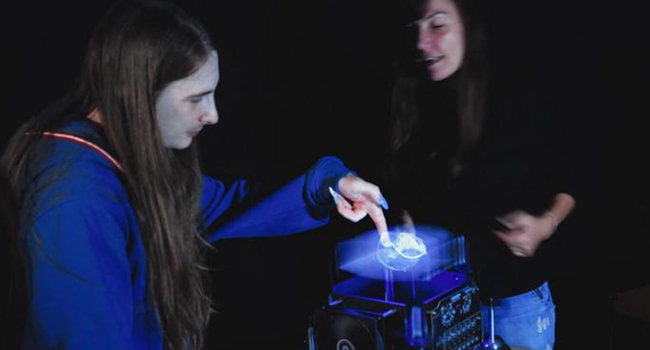
Scientists at the Public University of Navarra (UPNA) have achieved a breakthrough straight out of science fiction: they’ve created the world’s first holograms you can interact with directly. These three-dimensional images float in midair, visible from all angles without glasses, and respond to the touch of a hand. The news comes straight from UPNA’s official website.
Next-Gen Holograms
Lead researcher Dr. Elodia Bouzbib calls them “volumetric displays” or true-3D graphics. Unlike flat screens or VR headsets, these holograms need no extra gear—just step up, look, and touch. “You can grab an object, rotate it, move it—all in real time,” Bouzbib explains.
Until now, such tech existed only in prototype form. In 2021, Sony’s Spatial Reality Display showcased 3D visuals, but interaction was off the table. The Navarra team has gone further: their holograms not only appear but “feel” hand movements, acting like a touchscreen unshackled into 3D space.
How Does It Work?
The exact mechanics remain under wraps, but the system blends optical tech with high-res sensors. Lasers shape the image in the air, while infrared sensors track finger positions with millimeter precision, letting users manipulate objects. Think Tony Stark’s holographic interfaces from Iron Man, minus the bulky gloves or headsets.
Energy efficiency and compactness are still hurdles—prototypes likely rely on hefty setups. But the team insists the tech is primed for real-world testing.
Where Could It Shine?
The possibilities are staggering:
- Education: Students could “disassemble” a virtual engine or heart, studying them without physical models.
- Science: Researchers might manipulate 3D models of molecules or planetary systems on the fly.
- Entertainment: Imagine games where you sculpt castles from holographic sand or battle a virtual dragon barehanded.
- Museums: Ancient artifacts could be “handled” without risk of damage.
Bouzbib offers a glimpse: “You approach a floating engine, split it apart, study it, and reassemble it—no headsets, no wires. It’s intuitive and thrilling.”
What’s Next?
The UPNA team aims to refine the tech for commercial use. Priorities include shrinking the hardware and boosting hologram resolution. Down the line, these displays could weave into daily life—think home assistants or workstations for designers and engineers.
This isn’t holography’s first leap. In 2018, Brigham Young University researchers used “optical traps” to craft simple 3D images from particles, though without touch feedback. Navarra’s work is a quantum jump, merging sight and touch seamlessly.
The Takeaway
Touchable holograms are no longer a pipe dream—they’re here. UPNA’s scientists have handed us a tool that could reshape education, science, and fun. It’s early days, but in 5–10 years, these devices might pop up in classrooms, museums, or living rooms. A world of 3D illusions that respond to our hands is inching closer—and it’s downright mind-blowing.