make preferable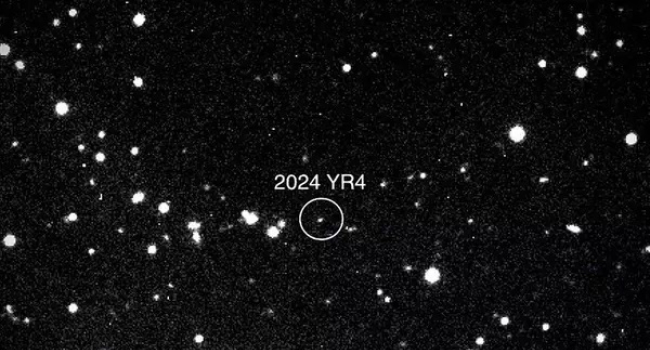
The National Aeronautics and Space Administration (NASA) has updated the odds of asteroid 2024 YR4 colliding with the Moon on December 22, 2032, boosting the probability to 3.8%. This revision, based on fresh data from the James Webb Space Telescope and ground-based observatories, was posted on NASA’s official site.
Discovered in December 2024 by the ATLAS telescope in Chile, 2024 YR4 initially sparked concern with a 3.1% chance of hitting Earth—the highest recorded for an object of its size in NASA’s history. But as observations piled up, that risk plummeted to a negligible 0.004%, ruling out any significant threat to Earth for the next century. Meanwhile, the Moon’s odds rose from 1.7% in February to the current 3.8%.
Sharper Size Estimates and New Images
Thanks to the James Webb Space Telescope, scientists narrowed the asteroid’s diameter to 53–67 meters—roughly the height of a 15-story building—making it one of the smallest objects tracked by this powerhouse instrument. The Associated Press highlighted new images showing 2024 YR4 as a faint, glowing dot against the cosmic void, a key contribution to studying asteroids in this size class.
“Tracking 2024 YR4 is a golden opportunity to refine our methods for monitoring small asteroids that could pose future risks,” said Johns Hopkins University astronomer Andrew Rivkin. He credits the synergy between Webb and ground telescopes for shedding light on the object’s traits and bolstering preparedness.
What’s Next for 2024 YR4?
The asteroid swings by Earth every four years, with its next close pass set for December 2028 at about 8 million kilometers. This flyby will let astronomers further pin down its orbit. For now, uncertainty lingers—final predictions for 2032 hinge on additional observations.
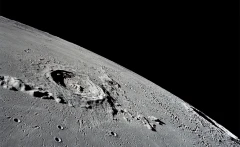
The European Space Agency (ESA) aligns with NASA, pegging Earth’s 2032 impact risk at 0.001%, a zero on the Torino Hazard Scale. The Moon, however, remains in play. Russian astronomer Leonid Elenin estimates a lunar strike could unleash a 5.2-megaton TNT-equivalent blast—340 times the Hiroshima bomb’s power—potentially triggering a meteor shower visible from Earth.
Science and Safety Implications
Though small—ranging from 40 to 90 meters in various estimates—2024 YR4 could level a major city if it hit Earth. Its study has been a proving ground for planetary defense. “This asteroid let us test the detection and analysis systems we’ll rely on for future threats,” Rivkin noted.
NASA’s monitoring continues, with Webb slated for more observations in March 2025 to probe the asteroid’s makeup—stone or iron—a factor that could shape impact forecasts.
Wrapping Up
While 2024 YR4 no longer endangers Earth, its story’s far from over. A 3.8% chance of a lunar collision keeps astronomers worldwide on alert. If it happens, expect a flash rivaling a full Moon and possibly a meteor shower. For now, scientists are seizing every chance to gear up for the next cosmic visitor.