make preferable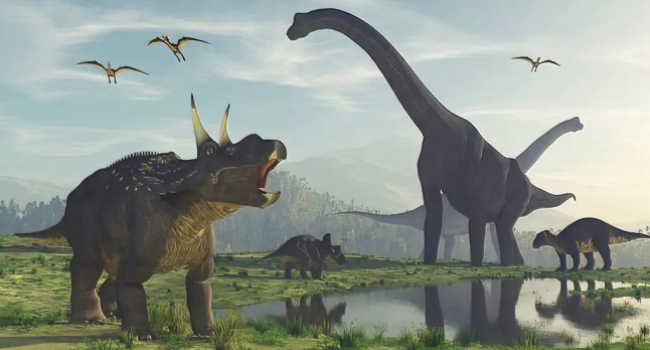
British scientists from the University of Bristol have reshaped our understanding of mammalian evolution. Their study, published in Paleontology, reveals that the ancestors of modern animals, including humans, started colonizing the land 72 million years ago—millions of years before the asteroid that wiped out the dinosaurs. This finding upends long-held beliefs about how mammals claimed dominance on Earth.
Life Before the Extinction
For decades, the prevailing view was that dinosaurs ruled the Mesozoic era unchallenged, filling every ecological niche. Mammals, according to this theory, lingered in the shadows—small, tree-dwelling creatures unable to compete with the colossal reptiles. Their rise supposedly began only after the cataclysm 66 million years ago, when a 10-kilometer-wide asteroid slammed into what’s now the Yucatán Peninsula, triggering a mass extinction.
But new evidence paints a different picture. By analyzing over 300 fossilized bone fragments from North American mammals, researchers found that marsupials and placental mammals were already venturing onto the ground 72 million years ago. Their joints and skeletons show adaptations for terrestrial movement, not just tree-hopping, signaling that mammalian evolution was well underway while dinosaurs still roamed.
The Role of Plants in Evolution
Flowering plants (angiosperms) were the game-changer. Emerging around 100 million years ago, they spread rapidly, forming dense forests, undergrowth, and open plains. This vegetation carved out new ecological niches for mammals to exploit. Seeds and fruits offered food, while thick grass provided cover from predators.
“Flowering plants transformed Earth’s landscape. They gave mammals a chance to evolve alongside dinosaurs, not just wait for their demise,” the study’s authors explain. The asteroid’s impact and the dinosaurs’ extinction didn’t start this shift—they accelerated a process already in motion.
How Did They Adapt?
Fossils reveal growing diversity among early mammals. Some, like the ancestors of kangaroos or primates, stuck to the trees, but others—early placentals—took to the ground. Their limbs lengthened, and their spines adapted for efficient travel across plains. This gave them an edge in the scramble for resources, even in a dinosaur-dominated world.
By the time the asteroid struck, scientists estimate, mammals had already claimed a foothold in terrestrial niches. The disappearance of giant reptiles merely cleared the path for their explosive diversification, eventually leading to millions of species—including us.
Why It Matters
This discovery shows mammalian evolution wasn’t a knee-jerk response to catastrophe but a gradual process that started long before. It highlights ecosystems’ role in shaping life: without flowering plants, mammals might have remained bit players.
It also speaks to life’s resilience. Even in the age of dinosaurs, nature was laying the groundwork for a new chapter—and mammals were poised to seize the opportunity. The team now plans to broaden their analysis, examining fossils from other regions to confirm this was a global trend.
Conclusion
Mammals began their march to dominance in the dinosaurs’ shadow, with the asteroid serving not as the starting gun but as a catalyst for their triumph. This finding reminds us that evolution isn’t random—it’s a complex interplay of opportunities where plants, animals, and even disasters play their parts. Our distant ancestors took their first steps 72 million years ago, and today, we reap the rewards of their journey.