make preferable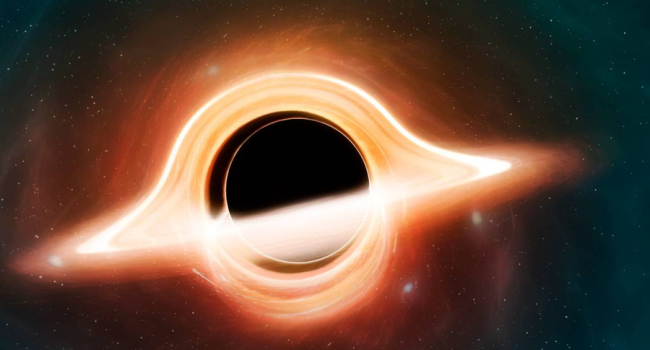
Astronomers have uncovered compelling evidence of a supermassive black hole in the Large Magellanic Cloud—a galaxy just a stone’s throw from the Milky Way in cosmic terms. This revelation marks it as the nearest known black hole of its kind to our galaxy. The findings are detailed in The Astrophysical Journal (AstroJournal).
Hypervelocity Stars: The Clue That Unlocked the Mystery
Scientists closely examined the behavior of 21 stars on the outskirts of the Milky Way. These stars zip through space at astonishing speeds, destined to eventually escape our galaxy’s grasp. Known as hypervelocity stars, their paths offered astronomers a critical lead.
Much like detectives tracing a bullet’s trajectory to pinpoint a shooter, researchers tracked the origins of these stars. About half were flung out by the gravitational pull of the Milky Way’s central black hole. The other half, however, pointed to a previously undetected massive entity concealed within the Large Magellanic Cloud.
“It’s astonishing to realize a supermassive black hole is practically in our cosmic backyard,” said Jessie Hahn, lead author of the study from the Harvard-Smithsonian Center for Astrophysics.
Why Did This Black Hole Stay Hidden?
This cosmic behemoth evaded detection due to its elusive nature: it emits no light and shows little interaction with its surroundings that would betray its presence. Its discovery was made possible by data from the European Space Agency’s Gaia mission, a satellite that maps stellar movements with pinpoint precision, allowing astronomers to unmask this invisible neighbor.
How Are Hypervelocity Stars Born?
The team explains that these high-speed stars emerge when a binary star system ventures too close to a supermassive black hole. The immense gravity tears the pair apart—one star becomes trapped in orbit, while the other is hurled into interstellar space at breakneck speed.
The Scale of This Cosmic Titan
Calculations reveal that the black hole in the Large Magellanic Cloud weighs in at approximately 600,000 solar masses. While this is considerably less than the Milky Way’s central black hole (4 million solar masses), it’s still a staggering figure, ranking it among the most massive in our galactic neighborhood.
This breakthrough not only deepens our understanding of the cosmic vicinity but also serves as a reminder of how many secrets remain tucked away, even in the most familiar corners of the universe.