make preferable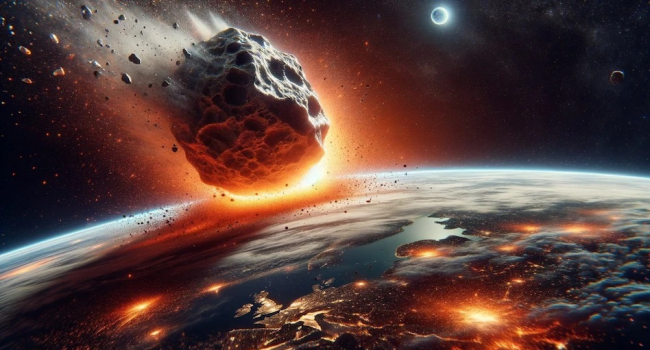
Scientists have revised their predictions regarding asteroid 2024 YR4, which was previously considered a potential threat to Earth. New calculations suggest that instead of colliding with our planet in 2032, the 90-meter-wide space object may change its trajectory and crash into the Moon.
What Are the Chances of a Collision?
A study by NASA’s Center for Near-Earth Object Studies (CNEOS) previously indicated that the probability of the asteroid hitting Earth had increased from 1% to 2.3%. However, David Rankin, an astronomer at the University of Arizona, discovered an alternative scenario—there is a 0.3% chance that the asteroid will hit the Moon instead.
Since the Moon has no atmosphere to slow the asteroid down, an impact could create a massive crater hundreds of meters wide and send debris into space. Some fragments could even reach Earth, but Rankin believes they would not pose a serious threat.
What’s Next?
The asteroid was first detected on December 27, 2024, and its trajectory remains uncertain. NASA will continue monitoring the object, and as new data comes in, the probability of impact could change—or even drop to zero. Similar cases have occurred in the past, where objects once deemed hazardous were later removed from threat lists.
How Can Earth Be Protected from Asteroids?
Various space agencies are developing methods to defend against potentially dangerous asteroids, such as 2024 YR4. Some proposed strategies include:
- Kinetic impact – altering the asteroid’s trajectory by crashing a spacecraft into it.
- Nuclear explosion – attempting to destroy the object or deflect its course.
Recently, China announced a recruitment program for specialists in planetary defense. The State Administration for Science, Technology, and Industry for National Defense (SASTIND) is seeking graduates to study asteroid monitoring. Last year, China unveiled a mission plan to alter asteroid trajectories using kinetic impact technology, with implementation expected by 2030.
When Will Scientists Learn More?
Asteroid 2024 YR4 will safely pass Earth in 2028, giving astronomers a chance to refine its trajectory calculations. This will help scientists better predict the likelihood of an impact in 2032 and, if necessary, adjust planetary defense strategies.