make preferable
Scientists have long debated the possibility of a catastrophic decay of the universe due to vacuum instability. Now, this scenario has received new scientific confirmation. Researchers from the University of Texas at Austin have, for the first time, used a quantum computer to simulate this process, allowing them to test the hypothesis of so-called false vacuum decay, Nature Physics reports.
How the Universe Could Vanish in an Instant
According to quantum field theory, the vacuum, which appears stable, may actually be in a metastable state. If the Higgs field were to suddenly change, a "bubble" of true vacuum could form and rapidly expand. Moving at the speed of light, it would alter the fundamental laws of physics, leading to the destruction of everything that exists.
How Scientists Modeled This Process
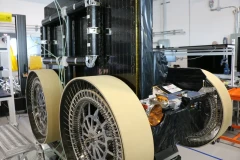
- Researchers used a 5,564-qubit quantum system to simulate vacuum decay.
- They applied D-Wave quantum annealing, which allowed them to create a simplified model of the universe.
- During the experiment, scientists observed the formation of true vacuum bubbles, confirming the possibility of such a scenario.
Key Takeaways
The researchers note that, according to calculations, the Higgs field will remain stable for trillions of years, making the likelihood of this catastrophe in the near future extremely low. However, the fact that a quantum computer successfully simulated this process opens new possibilities for studying the evolution of the universe.
Further development of such simulations could provide deeper insights into phase transitions in the early universe and test hypotheses about vacuum stability. In the long run, this could lead to new fundamental discoveries in cosmology.