make preferable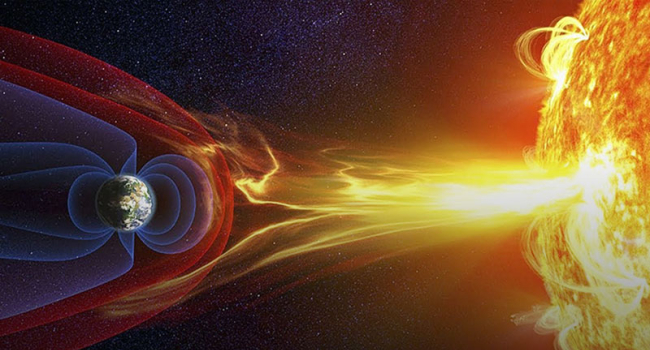
A magnetic storm of level G2 is expected on January 24 in the afternoon. This phenomenon was the result of a powerful solar flare that occurred on January 21, accompanied by a coronal mass ejection. The events were reported by the Laboratory of Solar Astronomy of the Space Research Institute of the Russian Academy of Sciences and the Institute of Solar-Terrestrial Physics of the Siberian Branch of the Russian Academy of Sciences.
What is known about the magnetic storm?
A solar flare of level M3.4 occurred in the central part of the solar disk, which makes its consequences most noticeable for the Earth. In addition to a powerful plasma emission, a small prominence was recorded during the event, which increased the total volume of matter in the cloud. The plasma velocity was approximately 500 km/s, which is why its arrival on Earth is expected on the evening of January 24.
Magnetic storms are assessed on a five-point scale: from a weak level G1 to the most powerful G5, which can lead to failures in the operation of power grids and satellites. Level G2 is characterized by moderate geomagnetic disturbances that can cause polar lights, especially at high latitudes.
According to preliminary data, the probability of a magnetic storm on January 24 is 41%, and geomagnetic disturbances - 35%. The forecast is being updated, but scientists are already reporting high chances of observing the northern lights in the evening.
How can this affect a person?
Although the effect of magnetic storms on health has not yet been proven, some groups of people may feel unwell.
According to Tatyana Machneva, head of the Department of Physics and Mathematics at the Pirogov Russian National Research Medical University, people with cardiovascular diseases sometimes notice a deterioration in their health. However, a clear mechanism for the effect of magnetic storms on the human body has not yet been established.
Solar flare details
The event that triggered the approaching storm lasted 52 minutes and was registered in sunspot group 3967 (S17E23) on January 21 at 14:39 Yerevan time. The flare was recorded in the X-ray range, which also indicates its high power.