make preferable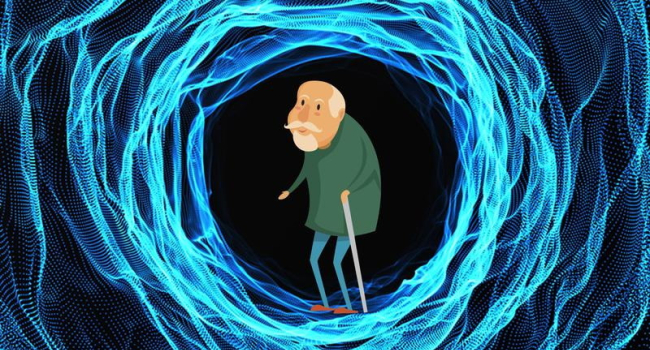
A study published in the journal Classical and Quantum Gravity (CQG) offers a new take on the famous grandfather paradox, one of the great mysteries of time travel. Lorenzo Gavassino, a physicist at Vanderbilt University, used thermodynamic and quantum mechanical approaches to propose a solution that resolves key contradictions.
What is the grandfather paradox?
The paradox occurs when a time traveler goes back in time and changes a key event, such as killing his grandfather before his parents were born. This action prevents the traveler from being born, making time travel impossible.
A new approach to solving the paradox
Gavassino proposed that when time travel occurs, the entropy of a system (a measure of disorder) cannot continue to increase in the usual sense. Instead, a parallel “entropy” line is formed that connects the beginning and end of the time loop.
This mechanism allows past events to be reversible:
- Correction of changes: For example, the death of a grandfather can be “undone”, eliminating the contradiction.
- Memory erasure: The actions of a traveler can be erased from his own perception, preventing further changes.
The role of closed time curves
Time travel is theoretically possible thanks to “closed time curves” - loops predicted by general relativity. These curves can exist in extreme conditions, such as black holes, where space and time are curved to the limit.
However, the behavior of quantum particles in such conditions remains poorly understood, and further research into the interaction of quantum mechanics and general relativity is needed to confirm these hypotheses.
What does this mean for the future?
Although Gavassino’s findings do not bring us any closer to creating a time machine, they significantly expand our knowledge of the nature of time and space.
“These results show that familiar limitations can be overcome, opening up new horizons for understanding time,” the author of the work notes.
So…
Gavassino’s work suggests fundamental changes to our understanding of time and entropy. Not only does this approach solve the grandfather paradox, but it also shows that time travel may be less counterintuitive than previously thought.