make preferable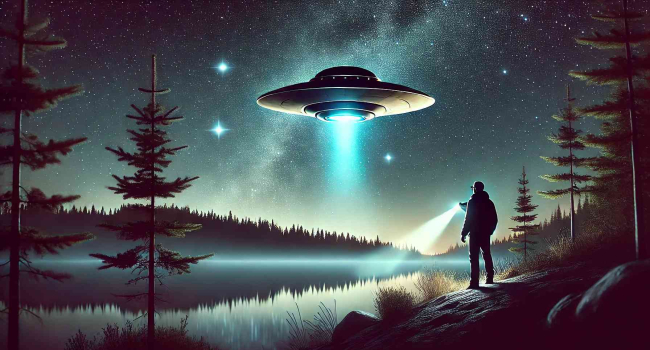
An international study led by Peter Vickers has shown that most scientists believe in the possibility of extraterrestrial life. The results of the study were published in the journal Nature Astronomy.
So, what do scientists think?
- Simple life:
- 6% of astrobiologists believe that the simplest forms of extraterrestrial life most likely exist.
- Among other specialists, this figure was 88.4%.
- Complex life:
- Only 67.4% of astrobiologists believe that complex life forms are likely to exist.
- Intelligent life:
- 2% of scientists believe in the possibility of intelligent aliens.
- However, less than 10% of respondents completely rule out this possibility.
Why do scientists think so?
Their beliefs are based not on direct evidence, but on indirect data, such as:
- Habitable conditions in the Universe: There are billions of planets in the Universe that may have suitable conditions for life.
- Habitable places in the Solar System: The oceans on the moons of Europa and Enceladus, as well as the conditions on Mars, are considered potentially habitable.
- Earth as an example: Life on Earth arose in conditions that may be repeated on other planets.
Fun fact
If neutral votes are excluded, the consensus among scientists regarding the existence of extraterrestrial life reaches 97.8%.
What's next?
The authors of the study emphasize that additional evidence is needed to obtain a definitive answer to the question. However, most experts are confident that the Universe is too large for life to be unique to Earth alone.