make preferable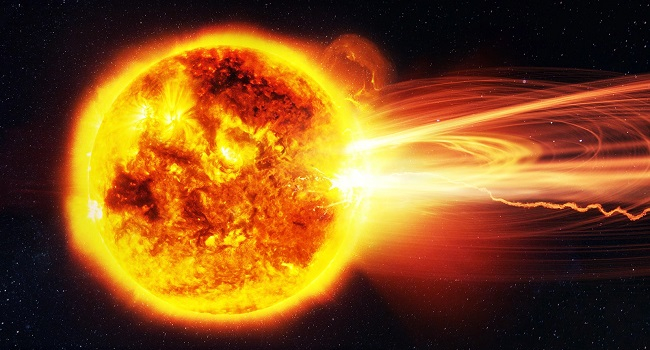
In 2025, solar flares may be especially powerful. This was stated in an interview with Izvestia by Sergei Yazev, professor, director of the Astronomical Observatory of the Irkutsk State University and senior researcher at the Institute of Solar-Terrestrial Physics of the Siberian Branch of the Russian Academy of Sciences.
Has the peak of activity already passed?
According to scientists' forecasts, the peak of the current 11-year cycle of solar activity was expected in 2025. However, as Yazev noted, events are developing faster than expected. Already last summer, a significant number of spots were recorded on the surface of the star, indicating the possible end of the peak of activity.
Despite this, the scientist does not rule out the possibility of powerful flares even during the decline of the cycle.
"As experience shows, strong solar flares are also possible during the decline of the cycle - single, but very powerful," Yazev said, adding that in 2025 their strength may be especially significant.
More frequent flares
Since the beginning of January 2025, six powerful flares have been recorded on the Sun, one of which reached class X. According to the Institute of Applied Geophysics (IPG), the most powerful flare occurred on January 4, in the sunspot group 3947 (N11E59). The flare power was estimated at X1.1, and it lasted 24 minutes."
Moreover, this was already the second flare of such strength at the beginning of the year.
Possible consequences
Solar flares of class X are among the most powerful phenomena occurring on our star. Their impact can lead to geomagnetic storms that affect the operation of satellites, communications equipment and power systems.
Astronomers warn that even isolated flares at the end of the cycle can create significant risks for technologies on Earth. Therefore, experts continue to closely monitor the activity of the Sun in order to minimize the possible consequences.