make preferable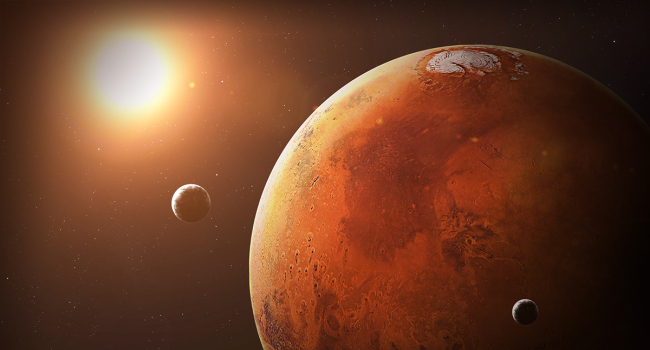
Mars is one of the most mysterious planets in our solar system. It continues to attract the attention of scientists and researchers due to its unique features that shed light on the history of the planets and the potential for extraterrestrial life.
NEWS.am Tech editors present ten of the most interesting facts about the Red Planet.
1. The highest volcano in the solar system is on Mars
Olympus Mons, a shield volcano, rises to an incredible height of about 21.9 km. Its base reaches a width of 600 km, making it almost three times higher than Everest, the highest mountain on Earth. This giant is a striking example of the volcanic activity that Mars had in its past.
2. A giant canyon that exceeds all Earthly analogues
Valles Marineris is a huge canyon system stretching more than 4,000 km in length. The canyon is up to 200 km wide and up to 7 km deep. This impressive relief significantly exceeds the size of the Grand Canyon on Earth.
3. Planet-Wide Dust Storms
Mars is home to dust storms of incredible scale. Fueled by solar energy, these storms can cover the entire planet and last for weeks or even months. As far as is known today, Mars is the only planet in the Solar System with global dust storms.
4. Mars once had water
Research conducted by the Curiosity and Perseverance rovers indicates that rivers, lakes, and possibly an ocean may have existed on Mars billions of years ago. River beds and mineral deposits found indicate that liquid water was present on the planet for a long time.
5. Mars has two small moons
Phobos and Deimos, the moons of Mars, are irregularly shaped and are likely captured asteroids. Phobos is gradually approaching Mars and is predicted to either collide with the planet or break up into many small fragments in 50 million years.
6. Thin atmosphere
The Martian atmosphere is about 100 times thinner than Earth's and consists of 95% carbon dioxide. The oxygen content in it is minimal - only 0.13%. This atmospheric structure makes Mars unsuitable for human life without special equipment.
7. A day on Mars is almost like on Earth
A Martian day, called a sol, lasts about 24 hours and 37 minutes, which is almost identical to an Earth day. However, a year on Mars lasts much longer - almost 687 Earth days, since the planet revolves around the Sun in a longer orbit. 8. Red Surface
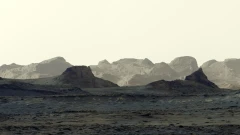
Mars gets its name from the distinctive red hue of its surface, which is caused by iron oxide, or rust. Underneath this layer of red dust are darker basaltic rocks.
9. Polar Ice Caps
At the poles of Mars are ice caps made up of water ice and frozen carbon dioxide. The northern cap, known as Planum Boreum, is mostly water ice, while the southern cap, Planum Australe, has significant deposits of dry ice.
10. Potential Life Below the Surface
Scientists speculate that microbial life may exist beneath the surface of Mars, where liquid water may be preserved by geothermal heat. The discovery of methane in the planet's atmosphere has caused much controversy, as its sources may be both biological and geological.