make preferable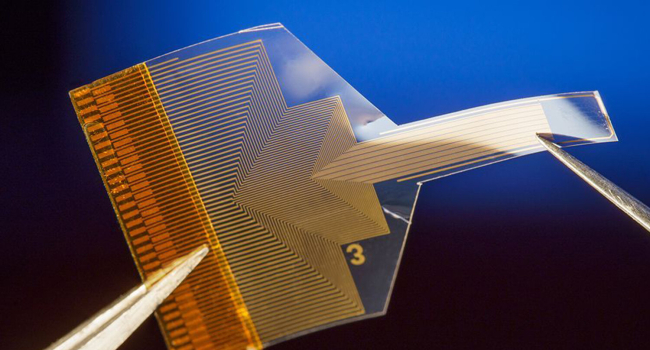
Scientists from the University of California, San Diego, have developed a neural implant that provides information about activity in the deep tissues of the brain. The device itself can be located on the organ's surface. The research has been published in the scientific journal Nature Nanotechnology (NatNano).
The new sensor consists of a thin, transparent, and flexible polymer film filled with graphene wires with diameters of 20 micrometers. According to the creators of the sensor, the implant brings closer the creation of a minimally invasive "brain-computer" interface that provides high-resolution data on deep neural processes. Currently, implants with thin needles that penetrate deep into the brain, causing inflammation and scarring of tissues, are used to read such information.
Tests on mice have shown that the graphene implant allows obtaining information about two types of neural activity - electrical impulses and calcium bursts. Using an electron microscope, scientists passed laser light through the device and obtained an image of calcium spikes in neurons.
Based on the collected data, researchers trained a neural network to predict calcium bursts in the brain at different depths.
According to the scientists, their development will accelerate fundamental research in the field of neurobiology and help unravel the mysteries of the brain.