make preferable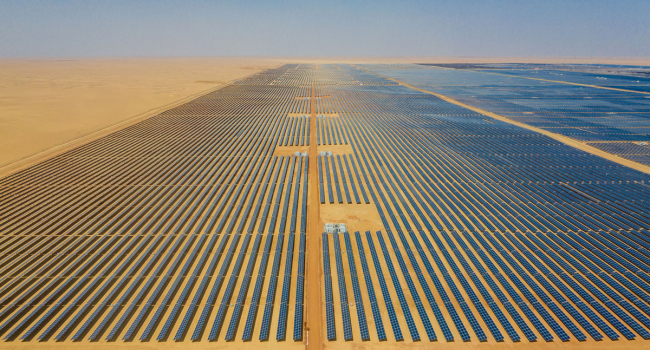
In the United Arab Emirates, the world's largest solar power station, Al-Dhafra, has been launched. The facility was inaugurated on the eve of the Climate Change Conference (COP28), scheduled to take place from November 30 to December 12 in the UAE.
With a capacity of 2 gigawatts, Al-Dhafra is located 35 km from Abu Dhabi. It is equipped with nearly 4 million bifacial solar panels. The facility will provide electricity to almost 200,000 households and reduce carbon dioxide emissions by more than 2.4 million tons.
During the peak of construction, approximately 4,500 jobs were created. The Al-Dhafra project was developed by Abu Dhabi Future Energy Company (Masdar), the Abu Dhabi National Energy Company (TAQA), the French energy company EDF Renewables, and the Chinese solar energy developer JinkoPower.
TAQA owns 40% of the project, while Masdar, EDF Renewables, and JinkoPower each hold 20%. Al-Dhafra will supply electricity to the Emirates Water and Electricity Company (EWEC) in accordance with a power purchase agreement from 2020.
After connecting the power station to the grid, the solar power generation capacity in the UAE has increased to 3.2 gigawatts. In September, EWEC called for proposals for the development of a 1.5 gigawatt solar farm in Al-Hazne, near Abu Dhabi. The country aims to triple the capacity of infrastructure using renewable energy sources to 14 gigawatts by 2030.
The UAE faced criticism for appointing the CEO of TAQA, the 12th largest oil company in the world by production volume, as the head of COP28. By 2050, the country plans to achieve an energy balance with 44% from green energy, 38% from gas, 12% from clean coal, and 6% from nuclear energy. The UAE leadership asserts that the country will become carbon-neutral by the middle of the century.