make preferable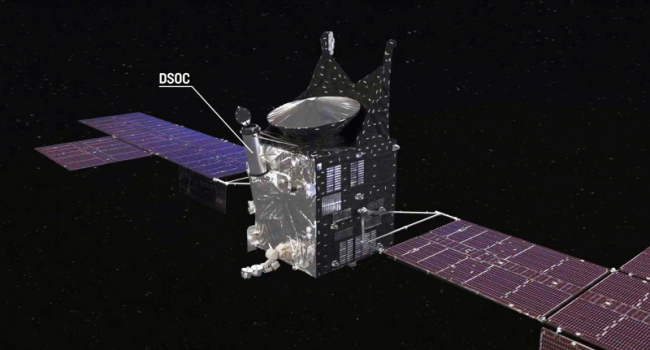
The United States' National Aeronautics and Space Administration (NASA) is planning to send a near-infrared laser transceiver into space to test a system that could eventually be used for communication with astronauts on Mars.
The necessary equipment for the Deep Space Optical Communications (DSOC) system will be integrated into the Psyche spacecraft, an automated interplanetary station designed to study the asteroid "Psyche." The launch of the spacecraft is scheduled for October 5th. The journey to the 225-kilometer diameter asteroid, located in the asteroid belt between the orbits of Mars and Jupiter, will take approximately two years. During this time, the DSOC equipment will be tested for communication with two ground stations located in Southern California.
According to NASA, near-infrared DSOC lasers could potentially increase data transmission efficiency by 10 to 100 times compared to the most advanced radio systems currently used in space. The ability to provide broadband laser communication in space has been successfully demonstrated for near-Earth orbit and for communication with satellites in lunar orbit. However, the vast distances of deep space present new technical challenges in this regard.
On the surface of Mars, the Perseverance rover can maintain communication speeds of up to 2 Mbps. The orbital Mars Reconnaissance Orbiter can transmit data to Earth at speeds ranging from 0.5 to 4 Mbps. Increasing these speeds using lasers by 10-100 times offers a significant advantage, despite the limitations imposed by the speed of light, which prevent synchronous communication between Earth and Mars.
The DSOC system uses near-infrared light, which is capable of carrying more data compared to radio waves. This enables ground stations to simultaneously receive more information. Spacecraft in deep space will be able to send more detailed images or even videos captured by their cameras to Earth using this communication system.
To receive commands, the DSOC transceiver will use a camera attached to a telescope with a 22 cm aperture for automated scanning and capturing of the rising line of the near-infrared laser signal transmitted from NASA's Optical Communication Telescope Laboratory in California. The data will also be transmitted to a 5.1-meter Hale Telescope at the Palomar Observatory of the California Institute of Technology.
To eliminate any noise in the photon detector signal used in the Hale telescope, it is cooled cryogenically. This will allow more effective detection of laser transmissions from DSOC. As the Psyche spacecraft moves away from Earth and approaches the "Psyche" asteroid, the time required for sending and receiving signals from DSOC will gradually increase. It is expected that the maximum distance at which data transmission will be carried out using the DSOC system will exceed 300 million km.
To ensure successful reception of the communication signal from Earth, special supports have been added to the DSOC laser transceiver, which securely holds the Psyche spacecraft's telescope in place, preventing the effects of vibrations.
"Each component of DSOC represents new technology - from powerful uplink lasers to telescope pointing systems and extremely sensitive photon detectors capable of capturing individual photons. To maximize the efficiency of information retrieval from weak signals transmitted over large distances, the project team had to develop new signal processing methods," commented Bill Klipstein, the DSOC project leader from NASA's Optical Communication Telescope Laboratory.