


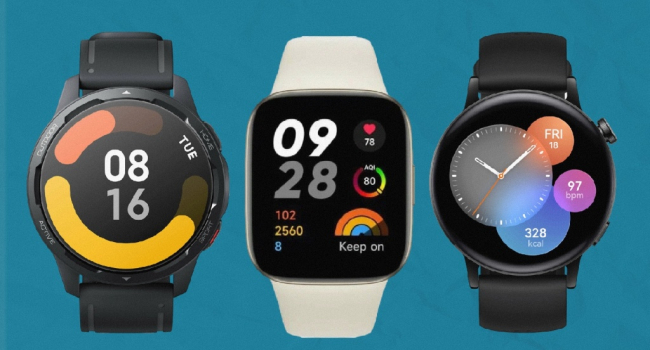
How to choose a smartwatch in 2026: A complete guide to features and capabilities
Smartwatches have long moved beyond being just watches that mirror notifications. By 2026 they have become full-fledged mini-computers on your wrist, capable of health monitoring, fitness tracking, independent calling, and even contactless payments. But there are hundreds of models priced from 40 to 2000 dollars. How do you avoid overpaying for unnecessary features and choose the one that will truly make you happy every day?
Smartwatch or Fitness Band: Where the Line Is in 2026
The difference between them is narrowing. Modern bands (Xiaomi Smart Band 9 Pro, Huawei Band 10, Honor Band 10) now include AMOLED screens from 1.7 to 1.9 inches, measure SpO₂, stress, and skin temperature, and last up to 20 days. However, the defining characteristic of a smartwatch is a full operating system (WatchOS, Wear OS, HarmonyOS, Zepp OS) that allows installing third-party apps such as maps, messengers, mini-games, and offline Spotify.
If basic features like steps, sleep, heart rate, and notifications are enough for you, a top-tier band for 4–8 thousand rubles is suitable. If you want independence from your phone and the ability to expand functionality, then you need a smartwatch.
Form Factor and Style: From Classic to Sport
- Classic designs with round screens and metal or leather builds: Huawei Watch GT 6 Pro, Samsung Galaxy Watch8 Classic, Withings ScanWatch 2 — suited for formal outfits.
- Sport models with streamlined plastic or titanium and silicone straps: Garmin Fenix 8, Apple Watch Ultra 3, Suunto Race S — made for running, swimming, and mountain activities.
- Rectangular watches, which are better for reading text: Apple Watch Series 11, Google Pixel Watch 4, OnePlus Watch 3 — versatile for daily use.
- Kids’ watches: Elari KidPhone, Jet Kid, Aimoto — with GPS tracking, an SOS button, and call features.
Weight matters too: light models (35–45 g) are barely noticeable, while heavier ones (70 g and above) are better for sports but can tire the wrist.
Sensors and Health: What Works Reliably in 2026
- Heart rate and SpO₂ sensors have accurate measurements everywhere (with an error of ≤3%).
- ECG is certified in Apple Watch, Samsung Galaxy Watch, Huawei Watch D2, and Withings devices.
- Blood pressure tracking is reliable only in models with an inflatable cuff (Huawei Watch D2) or high-end optical systems (Omron HeartGuide, Samsung Galaxy Watch8).
- Skin temperature measurement is a key trend of 2025–2026 (Pixel Watch 4, Galaxy Watch8, Apple Watch Series 11).
- Dual-band GPS is essential for running or cycling without a phone.
Battery Life: From One Day to a Month
- Apple Watch and Samsung last 18–36 hours (less with Always-On enabled).
- Huawei, Amazfit, and Garmin offer 7–21 days.
- Huawei Watch GT 6 Pro lasts up to 18 days in standard mode.
- Garmin Enduro 3 achieves up to 320 hours with solar charging.
Water Resistance: How Much You Really Need
- IP68 protects only from splashes and rain.
- 5 ATM supports showering and swimming in a pool.
- 10 ATM and above is required for diving (Samsung Galaxy Watch Ultra, Apple Watch Ultra 3).
Operating Systems: Which One to Choose
- WatchOS (Apple) works perfectly with iPhone but does not support Android.
- Wear OS 5 (Google/Samsung/OnePlus/Xiaomi) offers the widest app selection along with Google Pay and Google Assistant.
- HarmonyOS (Huawei) provides long battery life and smooth performance but lacks Google services.
- Zepp OS (Amazfit) and LiteOS (Honor) are lightweight and power-efficient but have fewer apps.
Price Categories in 2026
- Up to 130 dollars: Xiaomi Redmi Watch 5, Amazfit Bip6, Huawei Band 10 Pro.
- Up to 400 dollars: Samsung Galaxy Watch7, OnePlus Watch3, Huawei Watch GT6.
- Up to 1000 dollars: Apple Watch Series 11, Galaxy Watch Ultra, Garmin Fenix 8.
- Over 1000 dollars: Apple Watch Ultra 3, Tag Heuer Connected, Montblanc Summit.
Summary
In 2026 you should choose a smartwatch based on three main criteria:
- Operating system and ecosystem — Apple works only with iPhones; Wear OS and HarmonyOS are more universal.
- Battery life and water protection — decide whether you need more than 14 days of battery life and 10 ATM of protection.
- Purpose:
- Sports → Garmin/Samsung
- Style → Huawei/Withings
- Maximum features → Pixel Watch 4/OnePlus Watch 3
If you’re unsure, start with a fitness band, which is usually cheaper, and then move to a smartwatch. The main thing is to avoid buying something you won’t use every day.
- Related News
- Can you swim in the sea with a smartwatch?
- Smart gadgets 2026: Five devices that truly make life easier
- What gadgets is Apple preparing for 2027?
- Apple is holding back several key iOS 27 features for the fall presentation
- Apple is preparing a successor to AirPods: Its first smart glasses are expected to arrive in 2027
- Google unveils the screen-free Fitbit Air Fitness Band
- Tech Jobs
- Most read
month
week
day
- A deep partial lunar eclipse on 27–28 August: an almost total "Blood Moon" 990
- Google now forces a 24-hour wait before APK installation: Android’s new defense against malware 714
- Earth’s microbes may survive on the Moon. Even a bootprint is enough to shield them 642
- Firebird AI Joins UATE as a Strategic Member 642
- Astronomers have found the fastest star in the Milky Way—it races around a black hole at 8% of the speed of light 625
- Quantum entanglement has been achieved directly from sunlight for the first time 610
- How NASA's primary training centre is changing in the era of commercial space stations 563
- The anniversary iPhone 20 will be as thin as the Air: what the insider revealed 535
- From Excel to AI: A startup by specialists who relocated from Iran to Armenia helps businesses make sense of their data 489
- Robot knocks out teeth of five year old girl: Incident at Chinese museum leads to lengthy compensation dispute 476
- Archive