make preferable
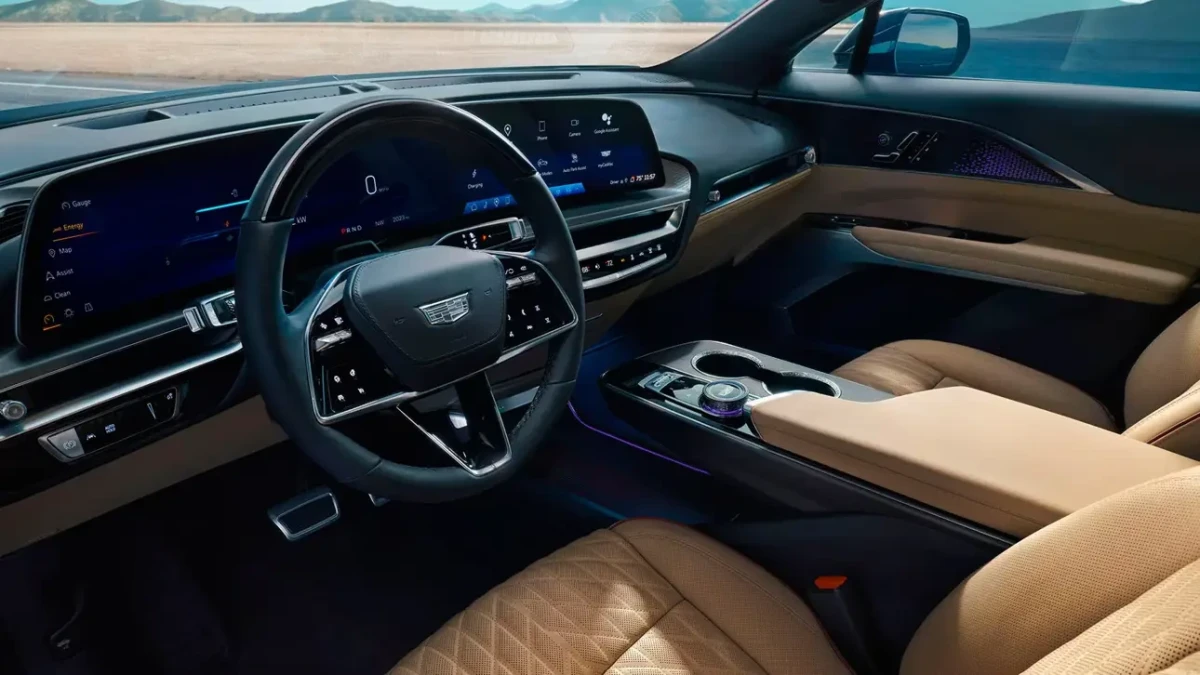
General Motors has unveiled a sweeping technology strategy that is set to transform the company’s approach to vehicle development and autonomous driving. The automaker plans to introduce a centralized computing system, turn OnStar into an intelligent AI assistant, and cut the time needed to develop new models in half. Ultimately, GM wants its vehicles to be able to independently carry out tasks for their owners, Axios reports.
Autopilot without the need to watch the road
One of the key pillars of the strategy is an autonomous driving system that would allow the driver not to watch the road or be ready to take over at any moment. It is first planned to debut in 2028 on the electric Cadillac Escalade IQ, and then be rolled out to GM’s popular gasoline-powered SUVs and pickup trucks, as well as next-generation vehicles.
Unlike driver-assistance systems that require constant supervision, GM’s technology is intended to enable fully autonomous driving on highways. During a trip, the driver would be able, for example, to reply to emails or watch videos without monitoring the traffic situation.
This approach is fundamentally different from the strategy of gradually expanding the capabilities of driver-assistance systems. As GM’s chief product officer Sterling Anderson, who previously helped develop Tesla Autopilot, explained, systems that require constant oversight can create a false sense of security for drivers: people begin to trust the automation more than they should.
GM intends to solve this problem differently: first offer full autonomy under limited conditions, and then gradually expand the range of situations in which the technology can be used. At the same time, the safety of such a system will depend on how reliably it handles the intended driving conditions and determines the boundaries of its own capabilities.
The car as an independent assistant
GM’s long-term goal is a mode that Anderson calls Mission Mode. In it, the vehicle will be able to independently carry out errands for its owner: for example, pick up a friend from the airport, take clothes to the dry cleaner, or go shopping.
The company sees such a scenario as one of the most promising applications of autonomous driving. However, making it a reality will require not only a reliable autopilot system, but also the ability to move safely along different types of roads and interact with surrounding infrastructure.
That is why GM is starting with highways, where driving conditions are more predictable, while leaving the expansion of autonomous driving capabilities to later stages.
A single computer instead of dozens of separate systems
To implement these plans, GM will update the electronic architecture of its vehicles. Instead of dozens of separate electronic control units, the company will introduce a powerful central computing system that will coordinate the operation of the powertrain, safety systems, artificial intelligence, and autonomous driving.
According to GM, the new architecture will deliver 40 times more computing power while reducing the amount of wiring by 30%.
Centralization is expected to simplify interaction between vehicle systems and create a foundation for more advanced software functions. It will also allow the company to make greater use of AI and virtual engineering in order to cut the development time for new vehicles in half.
This is especially important amid competition from Chinese automakers, which in recent years have accelerated the launch of new models and the introduction of digital features.
OnStar will become an AI assistant
Another part of the strategy is the modernization of OnStar, GM’s emergency communications service that has been operating for about 30 years. The company now intends to turn it into a more personalized and proactive assistant powered by artificial intelligence.
The assistant will be able to help passengers handle everyday tasks. For example, it could help parents coordinate their children’s trips, and help a family running late order food on the way home. Drivers will also be able to ask questions about the vehicle in plain language, find out the causes of malfunctions, and control various functions using voice commands.
GM expects that the new computing platform will allow vehicles not only to execute commands, but also to improve their software capabilities over time.
The OnStar AI assistant will appear in the 2027 model-year Cadillac Lyriq following a software update. It is later planned to be introduced in other models as well. In addition, a single OnStar mobile app will replace the separate Chevrolet, Buick, GMC, and Cadillac apps.
Ultimately, GM is trying to reshape its automotive business around software, artificial intelligence, and autonomous driving. The company aims not merely to add new features to its vehicles, but to create a platform that will accelerate vehicle development and, in the long term, allow cars to independently carry out tasks for their owners.