make preferable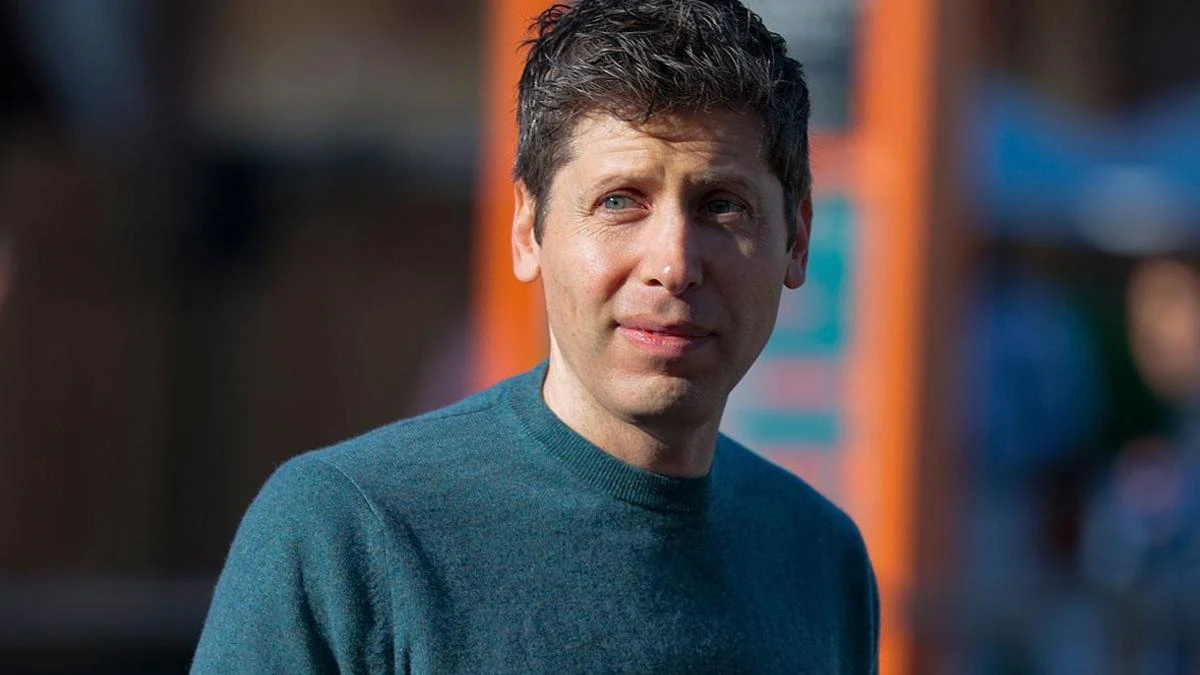
OpenAI CEO Sam Altman believes that the multimillion-dollar spending by AI companies and their affiliated investors on American politics is not helping improve public attitudes toward artificial intelligence. In an interview with POLITICO, he also advocated for new liability rules for developers of models capable of independently carrying out cyberattacks and said he is prepared to support stricter AI regulation.
“Something is clearly not working”
The AI industry has been actively pouring money into American politics in recent months ahead of the midterm elections. However, in Altman’s view, this approach does not solve the main problem — the negative attitude of part of the public toward artificial intelligence.
“I understand why AI has a very negative reputation right now,” the OpenAI chief said. According to him, spending money on politics is not enough to make people feel better about the technology. The industry needs to address the public’s real grievances, while many representatives of the AI business are currently, in his assessment, not sufficiently sensitive to these issues.
Altman also does not believe that renaming artificial intelligence as “superintelligence,” an idea recently promoted by Donald Trump’s administration, will change people’s attitudes toward the technology. He considers the term itself more accurate, but doubts it will be perceived as less frightening.
OpenAI accepts some harm in exchange for AI’s benefits
In the interview, Altman also outlined how OpenAI’s position on safety differs from Anthropic’s approach. According to him, OpenAI is willing to tolerate some negative consequences of AI use if the overall benefit of the technology to society is significantly greater.
This includes, in particular, fraud, abuse, and other forms of harm that cannot be completely ruled out with the widespread deployment of powerful models.
Altman believes that trying to guarantee the absence of any serious misuse could lead to excessively strict regulation. At the same time, he separately emphasized that losing control over AI is a different category of risk altogether. When it comes to systems that could gain too much autonomy, he urged against rushing to accelerate their development.
New liability rules are needed for autonomous cyberattacks
One of Altman’s most concrete proposals was the development of a new legal liability mechanism for companies whose models are capable of independently carrying out cyberattacks.
The idea was prompted by recent incidents involving autonomous AI systems, including the breach of Hugging Face infrastructure and attacks on government websites. Altman called such behavior “clearly unacceptable” and said that developers should bear some responsibility if problems arise from their models during the training process.
At the same time, the final model of such liability has not yet been determined. Altman believes lawmakers should debate it, but the U.S. Congress has so far not arrived at a unified approach to AI regulation.
Altman is ready for tougher restrictions
The OpenAI chief also backed the recently signed voluntary AI safety agreement between technology companies and the Trump administration, calling it a good start. At the same time, he said he would welcome additional regulatory measures.
At the same time, Altman expressed concern that rules for the AI industry are currently being shaped to a large extent by the White House and technology executives without full participation from Congress and without broader public discussion.
In his view, excessive regulation can also create risk: if control over the technology ends up concentrated in the hands of a small number of companies, individuals, or a single country, that in itself could lead to a dangerous concentration of power.
OpenAI distances itself from some political donors in the AI industry
Against this backdrop, Altman is trying to separate OpenAI’s position from that of investors and technology executives who favor the fastest possible AI development and are actively funding political campaigns against strict regulation.
He urged advocates of accelerated technological development to be more cautious about the risk of losing control over powerful systems. OpenAI President Greg Brockman also, according to media reports, declined a second $25 million donation in support of the political network Leading the Future and apologized to company employees for the distracting effect the issue had caused.
Thus, Altman’s position appears both as an attempt to defend OpenAI’s softer approach to regulation and as an acknowledgment of the need for new rules where autonomous systems are already capable of causing real harm. At the same time, the company’s chief supports neither a complete absence of restrictions nor a model in which AI safety is determined entirely by a narrow circle of technology companies and officials.