make preferable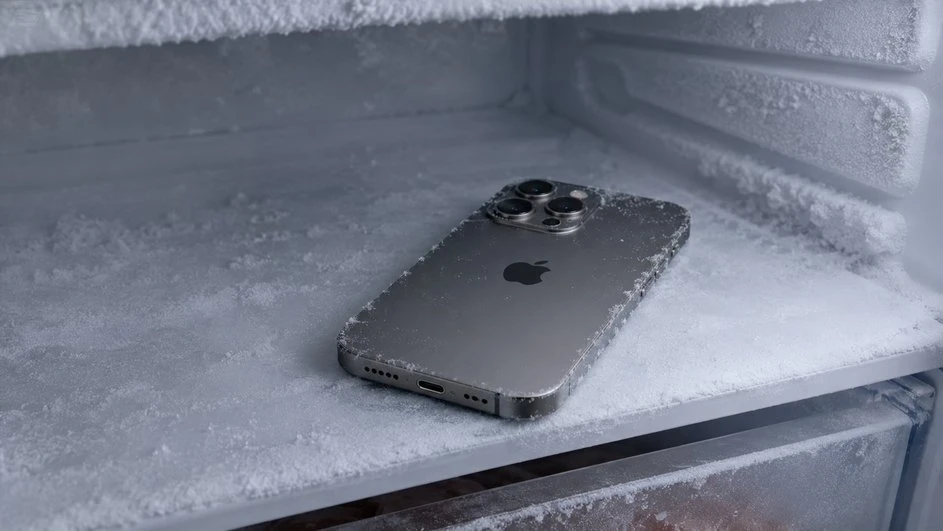
The advice to put an overheated smartphone or other gadget in the freezer may seem like a quick way to save the device from high temperature. In reality, this method can speed up its failure. Sudden cooling creates conditions for condensation to form and can damage both the electronics and the battery.
Nikolai Zenchenko, senior lecturer at the Department of Physics and Technical Mechanics at RTU MIREA, told Gazeta.Ru about this.
The main danger is condensation inside the корпус
When a hot device is placed in a freezer, its surface and internal components begin to cool sharply. Because of the large temperature difference, condensation may form inside the casing.
Moisture can settle on microchips, contacts, and the printed circuit board. As a result, there is a risk of short circuits, contact oxidation, and corrosion. Even if the smartphone continues to work after such cooling, damage to the contacts may appear later and lead to the failure of individual components.
Therefore, low temperature itself is not the main problem. More dangerous is the combination of intense heating, sudden cooling, and the subsequent appearance of moisture inside the device.
A sharp temperature change is also dangerous for components
There is another problem as well. Different materials inside the gadget have different coefficients of thermal expansion. When cooled abruptly, they contract unevenly.
Because of the resulting mechanical stress, soldered joints and ribbon cables may be damaged. Such fluctuations are especially undesirable for complex electronics, where many components are connected to each other within a small area.
Thus, an attempt to quickly lower the device’s temperature may create additional damage that was not present before cooling.
A freezer is especially dangerous for a damaged battery
A separate risk arises if the gadget already has a swollen or damaged rechargeable battery installed.
According to Zenchenko, sudden cooling can compromise the integrity of the internal layers of the battery cell. The danger may not necessarily become apparent right away: after the device is removed, the battery will begin to warm up again to room temperature, and the damaged cell may cause a fire.
Therefore, a gadget with signs of battery damage should especially not be “saved” with the help of a freezer.
The main rule here is simple: an overheated gadget should not be cooled abruptly. A freezer can turn an attempt to lower the device’s temperature into an additional risk for the electronics and the battery.