make preferable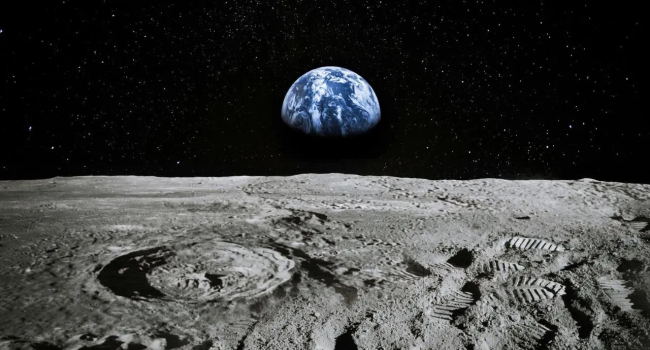
For a long time, the lunar surface was considered utterly sterile. Harsh ultraviolet radiation, temperature swings from –170 to +120 °C, and the lack of an atmosphere were thought to destroy any Earthly life within hours. New research by NASA scientists now shows that this is not entirely true. Some microbes are capable of persisting in lunar soil in a state of deep dormancy—especially in the polar regions where Artemis astronauts will soon be heading.
Why previous estimates were inaccurate
A 2019 study indicated that ultraviolet radiation and solar heat were the primary killers of microorganisms on the Moon. At the time, however, researchers treated the surface as a flat, completely exposed plane. They did not account for terrain: hills, craters, boulders, or even small depressions. Yet it is precisely these irregularities that cast shadows, where conditions change dramatically.
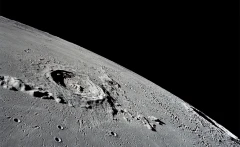
The polar regions are particularly significant. At the south and north poles, the Sun never rises high above the horizon. Permanently shadowed zones exist there, where temperatures remain steadily below –150 °C, and craters may harbour water ice. These very places have now emerged as prime candidates for the survival of terrestrial microorganisms.
What the scientists actually studied
A team from NASA’s Goddard Space Flight Center analysed three species of bacteria and two species of fungi. All are commonly found aboard crewed spacecraft and have already proven exceptionally resilient: they survive vacuum, extreme cold, and fluxes of high-energy particles.
The researchers overlaid survival data for these organisms onto detailed maps of the lunar surface that recorded ultraviolet levels and temperatures. The result was unexpected: at both poles, there exist zones where microbes could persist in a state of cryptobiosis—a deep "dormancy" in which metabolism all but ceases. They do not grow or move, but when conditions improve, they can "wake up."
Even a bootprint is enough
One of the most striking conclusions of the study is this: microbes do not require massive shelters.
"Even a bootprint or a rover track could create a habitable zone," noted study co‑author Prabal Saxena.
A microscopic patch of shade or a slight indentation in the regolith can already shield a microorganism from direct ultraviolet light. This changes our understanding of how easily humanity might inadvertently "seed" the Moon.
Why this matters for the Artemis missions
NASA is preparing Artemis III—the first crewed landing near the Moon’s south pole. That is precisely where the most promising deposits of water ice are found, along with the most "hospitable" conditions for microbes. Scientists warn that we must now be even more careful about what we accidentally bring with us.
"Our findings show that we need to be much more cautious about the materials we might unintentionally deliver and the footprints we might leave behind," said co‑author Heather Graham, an organic geochemist at Goddard.
The Moon as an ancient freezer for Earth
The research also raises another, almost fantastical question. Billions of years ago, powerful asteroid impacts may have blasted pieces of rock—along with microorganisms—off the Earth’s surface. Some of those fragments could have reached the Moon. If they landed in polar craters, they might still be preserved there in a frozen state.
"The Moon could serve as something like a freezer for Earth, preserving interesting evidence of our planet’s past—provided it ended up at the poles," says Saxena.
What comes next
Scientists are planning new experiments to more precisely determine the limits of life’s survival in extreme environments. The Moon is becoming not just a dead rock, but a complex world with its own "refuges," where terrestrial life could theoretically persist for extremely long periods.
The work was published on 19 August 2026 in the journal Science Advances.
In brief
New NASA research has shown that certain terrestrial bacteria and fungi are capable of surviving on the Moon in a state of deep dormancy, especially in permanently shadowed polar regions. Even a small footprint or rover track can create a shelter for them. This calls for more serious consideration of protecting the Moon from Earthly contamination ahead of the Artemis missions—and opens up the possibility that ancient terrestrial microorganisms may already have been "sleeping" in lunar craters for billions of years.