make preferable
A physicist from Brown University has proposed an alternative to dark energy: the accelerated expansion of the cosmos may be a consequence of quantum uncertainty in the very geometry of space-time. The work was published in the journal Physical Review D.
What the standard model gets wrong
In the accepted cosmological model, dark energy accounts for about 68% of the Universe's total energy. However, its properties do not align well with predictions from quantum field theory. This contradiction has long driven scientists to seek other explanations for why the cosmos is expanding ever faster, rather than slowing down under the gravitational pull of matter.
Quantum "fuzziness" instead of unknown matter
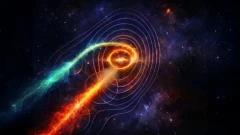
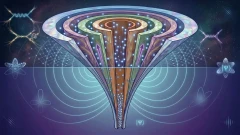
Savvas Koushiappas has proposed applying to cosmological scales an idea similar to Heisenberg's uncertainty principle. According to his approach, the size of the Universe and the rate of its expansion cannot both be known with absolute precision. This fundamental "fuzziness," manifesting all the way up to the visible horizon, is perceived as accelerated expansion.
Thus, the explanation shifts from a hypothetical substance—dark energy—to a modified geometry of space linked to quantum gravity. In some versions of the model, it is even possible to dispense with the Big Bang singularity altogether, replacing it with a "bounce" from a previous contracting phase of the Universe.
How to test it
Future sky surveys—projects such as DESI, Euclid, and the Vera Rubin Observatory—will help test the hypothesis. They will measure the expansion rate of the Universe with significantly higher precision than is currently possible. If the model's predictions are confirmed, it would mean that the first signs of quantum gravity have all along been hidden in the very fact of galaxies receding from one another.
In brief
A physicist has proposed explaining the accelerated expansion of the Universe not by dark energy but by quantum uncertainty in the geometry of space-time. The model can avoid the Big Bang singularity and allows for a "bounce" from a previous contracting phase. More precise measurements of cosmic expansion in the coming years will help test the idea. The work was published in the journal Physical Review D.