make preferable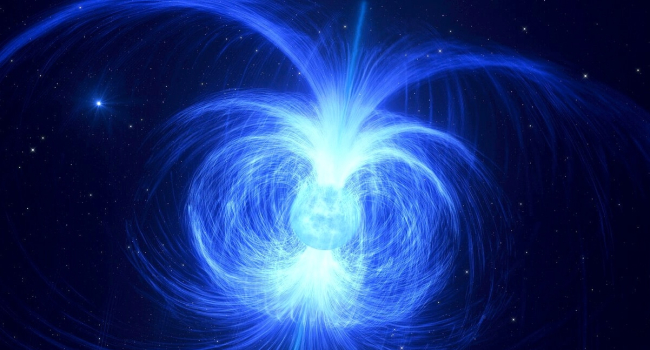
Scientists have obtained the most compelling evidence to date that extremely strong magnetic fields can alter the properties of a vacuum. Space that appears empty begins to behave like a prism, changing how light passes through it. The study was published on 5 August in the journal Nature.
A 90‑year‑old idea
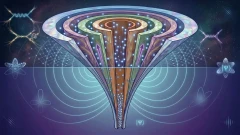
As Space.com reports, back in 1936, Werner Heisenberg and his student Hans Euler suggested that space is never truly empty. According to quantum mechanics, "virtual" particles—electrons and positrons—constantly pop in and out of existence. Under normal conditions, this "boiling" background is undetectable. However, an ultra‑strong magnetic field can affect how light travels through a vacuum, producing an effect known as vacuum birefringence.
Detecting vacuum birefringence requires a magnetic field more than 100 million times stronger than anything we have ever created on Earth. Fortunately, nature has provided us with magnetars—ideal cosmic laboratories for searching for this effect, noted co‑author Marcus Lower from Swinburne University.
What the observations showed
Magnetars—the dense remnants of massive stars that have exploded, about the size of a city—possess the strongest magnetic fields in the Universe. A team led by graduate student Rachel Stewart from Georgetown University pointed the IXPE X‑ray polarimeter at the magnetar 1E 1547‑5408. The data were supplemented by observations from the International Space Station and radio telescopes.
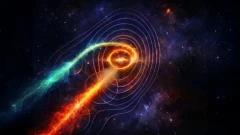
Two key results pointed specifically to vacuum birefringence. First, the X‑ray emission was nearly three times more polarised than predicted by standard models of emission from a neutron star's surface. Second, the direction of polarisation matched the orientation of the star's magnetic field—just as it does in the radio band. According to the researchers, this combination is best explained by the effect occurring in the vacuum.
It's even something of a relief: it means our theories are still working and nothing is broken in physics, commented Lower.
Why this matters
We are no longer just studying astronomical objects—we are using them to test the laws of nature, emphasised co‑author Michela Negro from Louisiana State University.
The observations provide a rare opportunity to test the predictions of quantum mechanics in conditions that cannot be reproduced in terrestrial laboratories. In the future, scientists hope to confirm the result with new missions and more sophisticated computer models.
With these future data and updated simulations, we may finally be able to complete the search that Heisenberg began nearly 90 years ago, said Lower.
In brief
Observations of the magnetar 1E 1547‑5408 using IXPE have provided the strongest evidence to date for vacuum birefringence—an effect predicted by Heisenberg and Euler in 1936. The star's extreme magnetic field appears to alter the properties of "empty" space, affecting the polarisation of light. The result confirms that the vacuum is not completely empty and opens the way for further tests of fundamental physics. The work was published in the journal Nature.