make preferable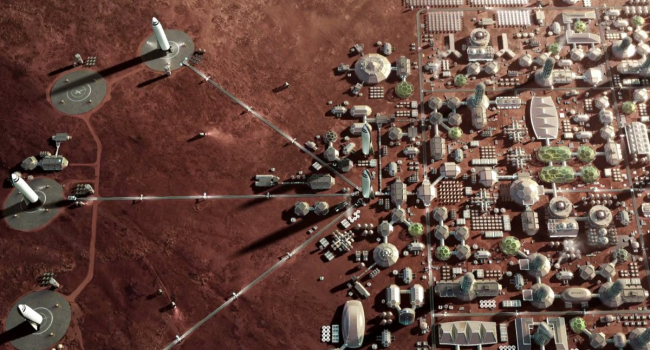
Humanity’s interest in Mars is growing rapidly. While just a few years ago the Red Planet was perceived purely as an object of scientific research, today projects for its future exploration and even the creation of permanent settlements are being discussed with increasing frequency. One of the most ambitious projects is the concept of the Martian city Nüwa, designed to house up to one million people.
From scientific missions to the idea of a Martian city
Several space missions that reached Mars in 2021 gave momentum to the development of such ideas. Among them are the UAE’s Hope mission, China’s Tianwen-1, and the American Perseverance rover. Experts attach particular importance to the United Arab Emirates' program, as it forms part of a long-term strategy to establish an international settlement on Mars by 2117. Against this backdrop, the international organization Mars Society announced a contest to develop a fully functional Martian city-state. Unlike traditional scientific base concepts, participants were asked to create a framework for a permanent settlement capable of independently supporting a population of one million. One of the most widely discussed projects was Nüwa, developed by the international team Sustainable Offworld Network (SONet) in collaboration with the architecture firm Abiboo Studio.
A city inside a cliff: protection from radiation and extreme conditions
The main feature of the project is that the city is proposed to be built inside a sheer cliff face rather than under domes on the surface. Living and working spaces would be located within a tunnel system extending up to 150 meters deep. This solution naturally protects residents from cosmic radiation, extreme temperature fluctuations, and the pressure differential between the Martian atmosphere and the city's interior. At the same time, the developers paid special attention not only to safety issues but also to the psychological comfort of future colonists. The interior of the complex features large green domes complete with vegetation, gardens, small water bodies, and public spaces. According to the designers, these zones are intended to offset subterranean living and foster a familiar urban atmosphere.
A self-sustaining colony with its own economy
The authors of the project proceeded from the premise that the future city must be as independent from Earth as possible. Food, building materials, clothing, machinery, transport, and virtually all life essentials are planned to be produced directly on Mars. Only the most complex components, such as advanced electronics, are expected to be imported. Energy will be supplied by solar power stations and nuclear power. Agricultural complexes for growing crops will be placed on the surface. The residents' diet will also include lab-grown meat, insects, and algae. Developers calculated that supporting a population of 200,000 people requires approximately 187.5 million cubic meters of air. This is precisely why building inside a cliff is considered the most efficient way to retain an atmosphere and lower the costs of constructing protective structures.
The path to the first Martian metropolis
Under the plan, Nüwa will serve as the capital of a network of five Martian cities, each accommodating between 200,000 and 250,000 residents. High-speed rail lines will connect them. One of the cities is planned near Mars's north pole, where water ice extraction is anticipated. Construction is expected to take place in phases. During the first ten years, equipment and machinery will be supplied from Earth. Developers estimate that by the end of the first decade, about 10,000 people will reside in the city. The cost of relocation for a single colonist is estimated at around $300,000, with each settler expected to join the colony's workforce. The project's creators believe that, given the necessary funding and political will, construction of Nüwa could begin as early as the mid-21st century, becoming a fully functional settlement by the end of the century. For now, Nüwa exists solely as an architectural concept. However, its creators are already proposing to use it not just as a blueprint for future Martian colonization, but also as a testing ground for developing new technologies in construction, environmental engineering, energy, biology, and human survival in extreme environments.
Based on materials from BBC Science Focus