make preferable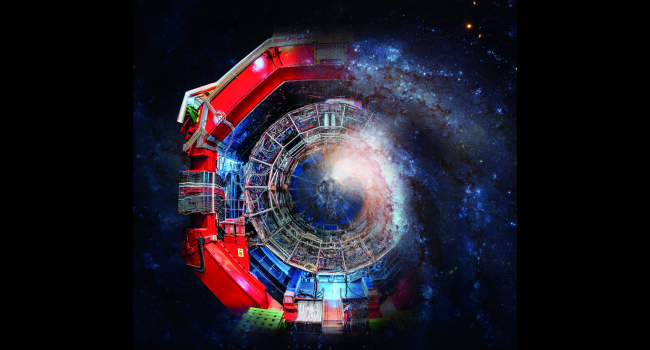
Japanese astrophysicists have confirmed that the object LHAASO J1912+1014u in the constellation Aquila is a proton "pevatron"—a natural cosmic accelerator that propels protons to energies exceeding one peta‑electronvolt. This surpasses the capabilities of the Large Hadron Collider. The findings were published in The Astrophysical Journal.
What a pevatron is
A pevatron is a cosmic object capable of accelerating particles to energies on the order of peta‑electronvolts (10¹⁵ eV). For comparison, the Large Hadron Collider operates at energies orders of magnitude lower. Such natural accelerators have long been sought in our galaxy, as they help explain the origin of the most energetic cosmic rays.
How the source's nature was confirmed
The source was discovered in 2024. A team led by Tsunefumi Mizuno of the Hiroshima Astrophysical Science Center combined data from several observatories: the Tibet AS and LHAASO gamma‑ray telescopes, the Fermi‑LAT space telescope, the FUGIN radio survey using the 45‑metre Nobeyama telescope, and the Chandra X‑ray observatory.
Three independent lines of evidence pointed to a proton‑rather than electron‑origin for the radiation:
- The gamma‑ray signal spans a remarkably broad energy range—from hundreds of tera‑electronvolts down to 400 mega‑electronvolts. Such a wide spread is difficult to explain by a purely electronic mechanism.
- The distribution of gamma‑ray emission in the giga‑electronvolt range matches the interstellar gas map from FUGIN. This is expected if protons are colliding with gas.
- Chandra detected only very weak X‑ray emission. Sources in which electrons are accelerated typically shine much more brightly in X‑rays.
What's next
The researchers plan to study several dozen similar objects in the Milky Way. This will help determine how common such natural particle accelerators are in our galaxy and what role they play in shaping high‑energy cosmic rays.
In brief
Japanese scientists have confirmed that the source LHAASO J1912+1014u in the constellation Aquila is a proton pevatron—a natural accelerator that propels protons to energies above 1 peta‑electronvolt. This is more powerful than the Large Hadron Collider. The conclusion is based on data from multiple observatories, all pointing to a proton rather than electron origin for the radiation. The work was published in The Astrophysical Journal.