make preferable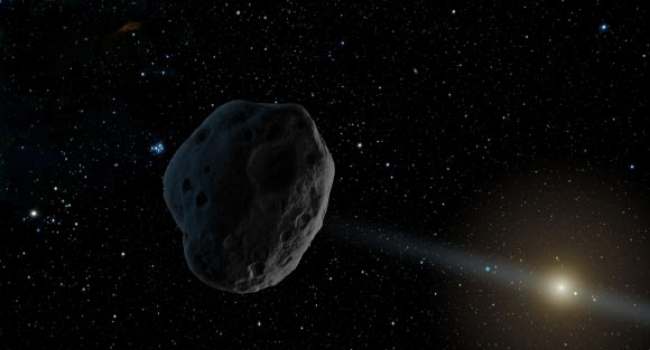
The object 1998 SH2, which for nearly three decades was thought to be an ordinary near-Earth asteroid, has in fact turned out to be a "dark comet" — a hybrid body that looks like an asteroid but behaves like a comet. The study was published in the journal Nature Astronomy.
What "dark comets" are
Such objects combine the properties of both classes of small bodies. They lack the bright tail characteristic of ordinary comets, but they exhibit non-gravitational perturbations in their orbits. This indicates a hidden source of reactive force — typically the sublimation of subsurface ice.
How the object's nature was revealed
Astronomers tracked the orbit of 1998 SH2 from 1998 to 2016, then lost sight of it for two orbits around the Sun. When the object passed within 3 million kilometers of Earth in 2025, it was not where expected. The discrepancy from the calculated orbit indicated the action of non-gravitational forces.
Observations using the ATLAS network, the CFHT telescope in Hawaii, and instruments from the European Southern Observatory in Chile revealed a faint coma — a gaseous halo around the nucleus — and a narrow faint tail. This confirmed the object's cometary nature. The diameter of 1998 SH2 has been refined to approximately 380 meters.
Why this matters
According to NASA navigation engineer Davide Farnocchia, the detection of such perturbations could become an important tool for planetary defense. It would help more accurately understand which objects are actually comets, how their orbits evolve, and how dangerous they are to Earth.
The discovery also offers a simpler explanation for the strange acceleration of the interstellar object 'Oumuamua and calls into question previous estimates of the composition of potentially hazardous bodies. If there are more "dark comets" than previously thought, they could have played a role in delivering water to the early Earth.
In brief
The asteroid 1998 SH2, observed for nearly 30 years, has turned out to be a "dark comet" — an object without a bright tail but with signs of cometary activity. Its nature was confirmed by observations of a faint coma and tail after orbital anomalies were detected. The discovery is important for planetary defense and may explain the behavior of some interstellar objects. The work was published in the journal Nature Astronomy.