make preferable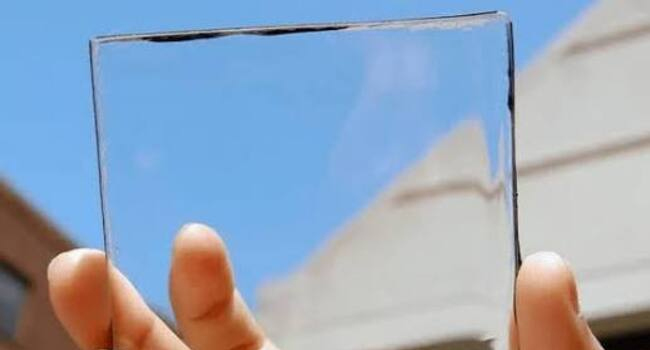
The technology of "transparent aluminum," first shown in the sci-fi movie Star Trek IV: The Voyage Home, has become a reality today. Researchers at the U.S. Air Force Research Laboratory (AFRL) have developed an advanced transparent ceramic armor that combines high strength, light weight, and impact resistance.
The development was created as part of AFRL's collaboration with the Defense-wide Manufacturing Science and Technology (DMS&T) program and aims to create new materials for protecting military equipment, as well as producing transparent windows for infrared sensor systems.
Armor half the weight of traditional glass
The new material is called ALON (aluminum oxynitride)—a transparent compound consisting of aluminum, oxygen, and nitrogen.
Unlike traditional multi-layered bulletproof glass, ALON provides a comparable or higher level of protection at a significantly lower thickness and weight. According to the AFRL, transparent ceramic armor weighs less than half of traditional glass counterparts and requires less thickness to provide protection against ballistic threats.
This gives the military additional advantages when equipping aircraft and ground vehicles: reducing mass increases mobility, extends flight range, or allows adding extra equipment without increasing the payload burden.
How transparent aluminum is made
The production of ALON begins with a powder material. It is shaped into the required structures and then transformed into transparent ceramics under high temperature and pressure.
The manufacturing process remains complex and requires precise control at every stage. This is precisely why the dimensions of such transparent panels were limited for a long time.
Since 2006, the AFRL, together with the Defense Production Act Title III program, has been working on improving ALON manufacturing technologies, including enhancing the characteristics of the raw powder and material processing methods.
Transparent panel sizes have been increased
Before the program began, the largest ALON panels had an area of no more than 2.8 square feet. Thanks to advancements in manufacturing technology, the American company Surmet Corporation was able to establish the production of panels up to 8 square feet in size.
The AFRL notes that increasing the size of the material was a major achievement, as ALON production involves many complex steps that must be performed with high precision.
"Creating an eight-square-foot window is the result of years of work. Manufacturing a larger structure that remains both lightweight and durable significantly expands the capabilities of military systems," noted Richard Porter, AFRL manufacturing technology lead.
The material is already used in military equipment
ALON transparent armor is already used in some U.S. military systems, including Black Hawk and Chinook helicopters.
Due to its high strength and damage resistance, the material also caught NASA's interest. The agency considered using it for the protective windows of the Cupola observation module on the International Space Station, where conventional glass is prone to scratches and damage from microparticles.
The next step: Curved transparent panels
The next challenge for the developers is creating curved elements from ALON. Such designs could expand the material's application in aviation and space technology; however, their production may require additional technological solutions or the use of other materials.
Developers note that the story of ALON demonstrates how ideas from science fiction gradually transition into practical engineering reality. Technology once shown in the movies Star Trek and Jurassic World is today becoming part of real-world protection and surveillance systems.