





 make preferable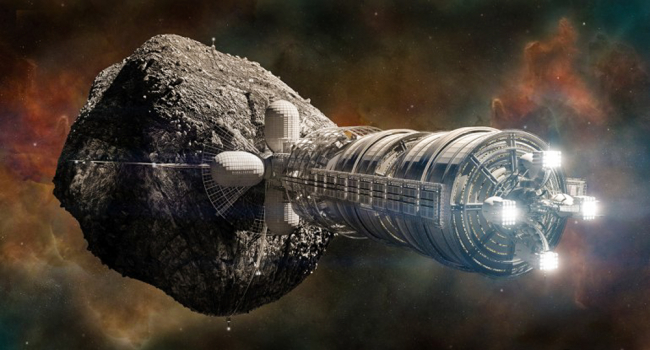
The space industry is gradually expanding beyond traditional satellite launches and research missions. One of the most ambitious directions of the future economy is the extraction of resources on asteroids—an idea that until recently seemed purely science fiction. The development of robotics, autonomous systems, and the declining cost of space launches are creating conditions for the emergence of a new market associated with the extraction of rare materials beyond Earth.
According to a study by ResearchAndMarkets, the asteroid mining market could demonstrate rapid growth in the coming years. The main factors driving market expansion are the growing demand for rare materials, the increasing number of commercial space missions, and the development of technologies for autonomous operations in space. Special attention is paid to the creation of robotic complexes capable of independently locating, extracting, and processing resources without direct human involvement.
Asteroids as a source of rare materials
Interest in asteroid mining is primarily linked to the presence of valuable elements in space objects, including platinum-group metals. These materials are widely used in industry, electronics, energy, and the manufacturing of high-tech equipment.
The growing number of space missions creates a foundation for the development of this field. In 2023, 3,143 objects were launched into space—24% more than the previous year. Furthermore, about 81% of launches were accounted for by the US, showing active involvement from both government entities and private companies in space exploration.
It is precisely such missions that allow scientists to study potentially promising asteroids, analyze their composition, and select objects that could become resource sources in the future.
Robots instead of miners
One of the key development directions in the industry is the creation of autonomous robots designed to operate in extreme conditions.
In October 2023, British company Asteroid Mining Corporation presented the six-legged robot SCAR-E at the Space Economy Summit in Los Angeles. The vehicle, weighing approximately 20 kilograms, was developed to work both on Earth and in space environments.
The robot's design allows it to navigate complex terrain, perform material analysis, and execute processing tasks. Developers believe that such systems could transform the approach to resource extraction, reducing the need for traditional methods associated with significant environmental impact.
In the future, such technologies could serve as the basis for automated complexes operating on the Moon, asteroids, and other space bodies.
International partnerships accelerate industry growth
The market's development is accompanied by cooperation between space companies from different countries.
In 2024, Japanese company ispace signed a memorandum of understanding with Asteroid Mining Corporation to deliver the SCAR-E robot to the lunar surface as part of a technology demonstration mission.
Such projects are viewed as an important preparatory stage for the future development of space resources. Lunar missions make it possible to test equipment in conditions close to those that future asteroid mining systems will face.
Among the companies considered the most prominent players in this field are Planetary Resources, Deep Space Industries, Asteroid Mining Corporation, and AstroForge.
North America held the largest market share in 2025, remaining the main hub for the development of commercial spaceflight.
The space economy could reach $1.3 trillion
The development of asteroid mining is taking place against the backdrop of overall growth in the space economy. According to estimates by UBS analysts, the total potential volume of the global space market could reach $1.3 trillion by 2040.
Average annual industry growth is projected at approximately 7%. Under a more favorable scenario, if technological progress moves faster, the market could approach the $2 trillion mark.
At the same time, analysts note that the forecast was adjusted to account for potential delays, technical complexities, and infrastructure constraints.
According to the Satellite Industry Association, the volume of the global space economy in a narrower definition reached $429 billion in 2025, an increase of 3% year-over-year. Commercial satellites made the primary contribution, accounting for $303 billion, or about 71% of the total market.
Ground equipment remains the largest segment at $165.2 billion. Satellite services accounted for about $105 billion, including television, radio communications, internet, and other consumer services.
Cheap launches will reshape the market
One of the primary drivers of future growth will be the reduction in the cost of placing payloads into orbit.
According to UBS forecasts, by 2040 the cost of delivering payload to low Earth orbit could fall below $250 per kilogram. Currently, this figure is estimated at approximately $1,500–$2,000 per kilogram.
Lower launch costs could make satellite communications, Earth observation, space logistics, and new commercial services far more accessible.
Furthermore, the majority of future economic growth is expected to stem not so much from the launches themselves, but from ongoing services provided using space infrastructure.
Space stations, manufacturing, and data centers in orbit
Beyond asteroid mining, promising areas include private orbital stations, space-based manufacturing, lunar infrastructure construction, and orbital data centers.
However, many of these projects are still in early stages and require substantial investment. The main obstacles remain high development costs, technical risks, and the need to establish new regulatory frameworks for space activities.
Among other industry risks, experts highlight launch failures, project delays, volatile cash flows, orbital congestion, and the lack of a clear international legal framework.
Despite the challenges, space is gradually turning into a full-fledged economic market where new industries—ranging from asteroid mining to off-planet manufacturing and computing—could emerge over the coming decades.