




 make preferable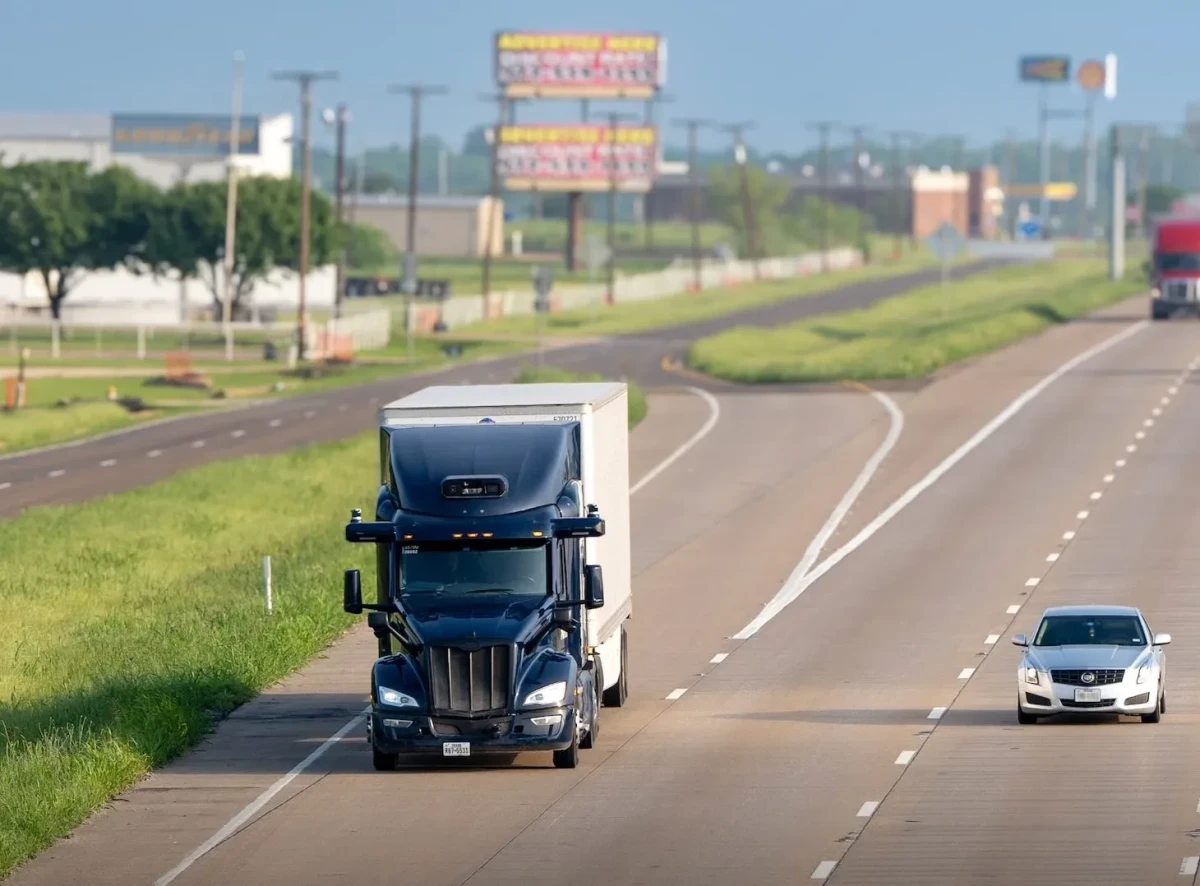
Aurora, a company developing autonomous driving technology, expects to put more than 30,000 driverless trucks on the road by the end of 2030 and generate about $5 billion in annual revenue from them. At first glance, the goal looks almost fantastical: Aurora plans to end 2026 with just 200 driverless trucks and roughly $80 million in annual revenue.
Aurora CFO David Maday believes the scale of the plan is deceptive. According to him, 30,000 vehicles is a huge number for the autonomous transport market, but relative to the overall trucking market it remains small.
The four largest truck manufacturers produce around 250,000–300,000 new vehicles every year. That is why Aurora does not intend to manufacture tens of thousands of trucks itself, but rather to gradually equip the existing market with autonomous systems.
“I don’t think this is just an ambitious goal. I think we can do it,” Maday told TechCrunch.
The main turning point should come as early as 2027
Aurora currently uses a model it calls transportation-as-a-service. The company owns the autonomous trucks, operates them, and hauls freight for customers including Detmar Logistics, Hirschbach, McLane, and Werner.
For transportation, Aurora receives about $2 per mile, including a fuel surcharge.
However, the company views the current setup as a kind of proof-of-viability stage for the technology. In total, Aurora plans to cap this fleet at around 500 trucks.
After that, the business is expected to shift to a different model — driver-as-a-service.
In this case, the customer buys the autonomous truck and continues to own and maintain it. Aurora provides the autonomous driving technology and charges for its use — about $0.85 per mile.
At the same time, Aurora retains responsibility for the autonomous driving system itself and the hardware installed for it.
For the company, this is a fundamental difference. If Aurora has to buy and maintain tens of thousands of trucks itself, scaling would require enormous capital. But if the vehicles belong to carriers, Aurora will be able to expand its fleet of autonomous systems without carrying the cost of the trucks themselves on its balance sheet.
200 trucks are supposed to become 1,000
According to the company’s plan, there will be about 200 driverless trucks on the roads by the end of 2026.
A year later, Aurora expects to surpass the 1,000-vehicle mark.
The company expects that around the first half of 2027 it will be able to reach break-even gross margin on a run-rate basis — at roughly 500 trucks.
This means that transportation revenue should begin to cover the direct operating costs of running the vehicles.
After that, the project’s economics should improve even further.
Mass production of hardware should make autonomous trucks cheaper
The next important milestone is scheduled for the end of 2027. Aurora plans to transition to third-generation hardware — sensors, computers, and other components a truck needs to drive itself.
Unlike the current hardware, it is planned to be produced at scale.
Production will be handled by Aurora’s partner Aumovio, previously known as Continental. The company will not only develop and manufacture the hardware package but also finance it for Aurora.
This reduces the financial burden on the autonomous systems developer.
In addition, Aumovio will handle servicing and repairs of the installed packages for Aurora’s customers.
In this way, the company is trying to solve two scaling problems at once: reduce hardware costs and avoid tying up its own capital in the purchase of the trucks themselves.
By 2030, Aurora wants to cover almost the entire continental United States
Today, Aurora’s operations are limited to several states in the southern U.S. But the company expects to gradually expand its geographic footprint.
According to Maday, by 2030 Aurora’s driverless trucks should already be operating across most of the continental United States.
It is precisely the combination of fleet scaling, lower hardware costs, and a shift to a model in which the trucks belong to customers that is supposed to allow the company to move from hundreds of vehicles to tens of thousands.
At the same time, investors have so far not shown much confidence in the forecast.
After Aurora’s presentation for analysts and investors on September 23, the company’s shares continued to decline. On Monday they closed at $5.29, down 12.42% for the day.
For Aurora, this means the market is still evaluating not only the potential size of the future business but also whether the company can actually make the journey from a few hundred driverless trucks to 30,000.
And then Aurora will return to robotaxis
Trucking, however, is not the company’s only long-term goal.
Maday says that by around 2028, Aurora expects to achieve a significantly lower cost base for its autonomous technology. Only after that, he says, will the company be able to move on to its next areas.
In particular, Aurora still is not abandoning its plans to enter the robotaxi market.
For now, the company is focusing on trucks, where autonomous driving can be scaled through commercial freight operations. But if the promised cost reduction really happens, the same technological foundation could also be used for passenger transport.
Thus, Aurora’s plan for the next four years is built not so much around producing 30,000 of its own vehicles as around creating a model in which carriers buy the trucks, and Aurora sells them autonomous driving as a service.
If the company can implement this model at the stated scale, 2027 will become its first serious test: that is when it will become clear whether the business can move from demonstrating the technology to mass commercial deployment.